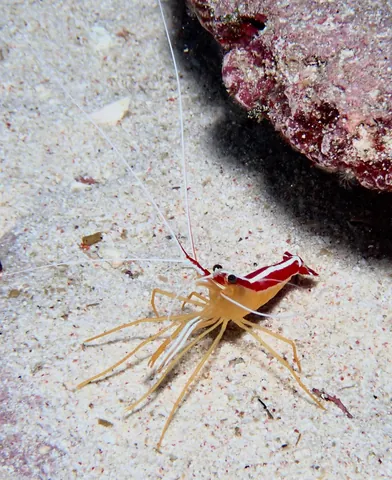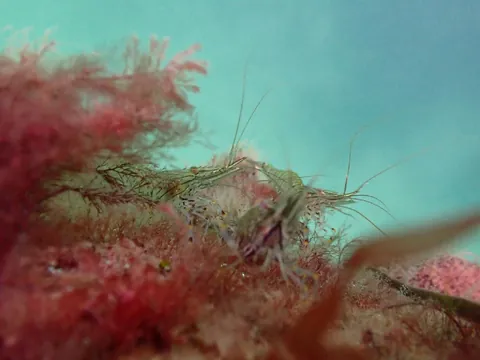
Common Prawn
Palaemon serratus
Stenopus hispidus
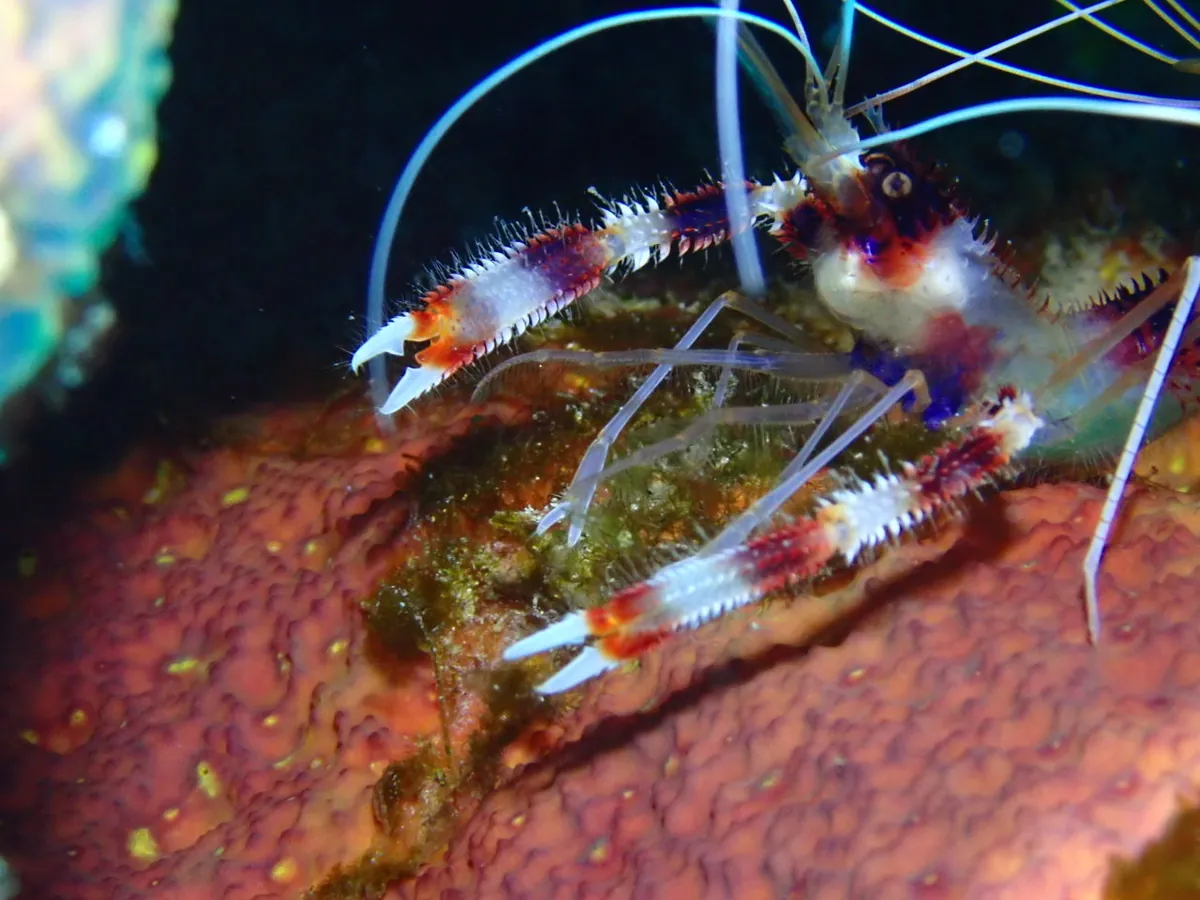
The banded coral shrimp is a small reef shrimp that works as a cleaner. It keeps a home hole in the reef and waits for fish to come to it. When a fish stops, the shrimp climbs over it and picks off parasites, fungus and damaged tissue with its three pairs of claws. To call fish in, it stays close to its hole and does a slow dance, whipping its long white antennae from side to side. This waving tells passing fish that the cleaning station is open. Adults live as faithful pairs, one male and one larger female, and hold a small patch of reef together.
Also known as: banded cleaner shrimp, banded boxer shrimp, cleaner shrimp
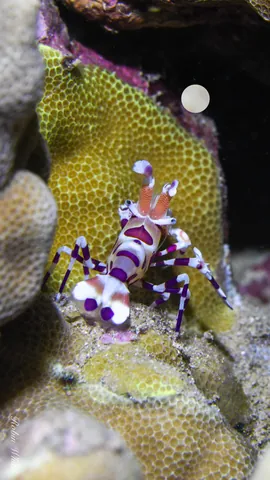
Look for the red and white banding pattern and where it stops. The head shell, the tail and one oversized pair of claws are banded; the long antennae and the remaining legs are plain white. That mix of banded body and white antennae, waving from a dark hole, is enough to name it at normal viewing distance.
The body itself is see-through. The colour comes from bold red and white bands across the shell over the head, along the tail, and on the large third pair of legs, which end in the biggest claws. The antennae and the other legs are plain white with no bands. The shell, tail and big legs are covered in small spines, so the animal looks rough rather than smooth. Females are usually bigger than males.
This shrimp lives on coral reefs and rocky bottoms in warm seas around the world, in the Atlantic, Indian and Pacific Oceans, and it reaches into some cooler areas as well. It sits just below the tide line and can be found down to 200 m, though divers meet it far shallower, from about 1 m. Look under coral ledges and in natural dips and cracks in rock, where it hangs upside down in the shade with only its antennae showing.
This shrimp can tell members of its own species apart from other animals, and probably does it by smell, using chemical signals in the water. That kind of recognition is rare among invertebrates.
Describe what you saw and we name it, then keep every species you find in your Oceandex.