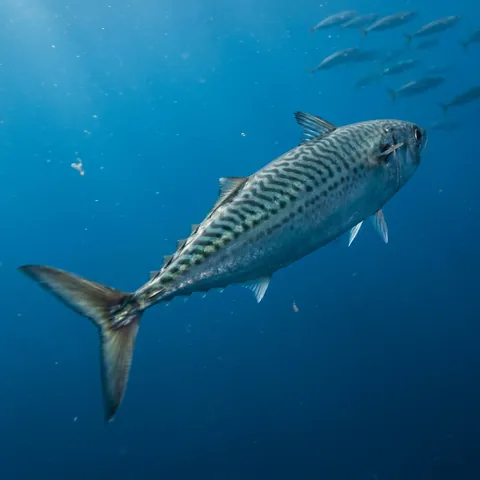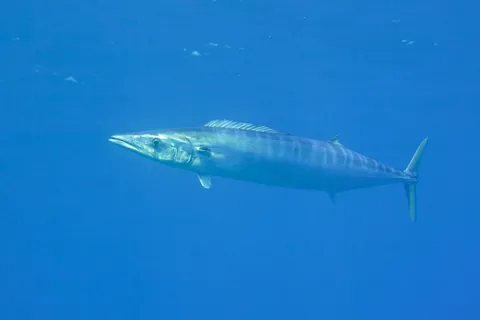
Atlantic Mackerel
Scomber scombrus
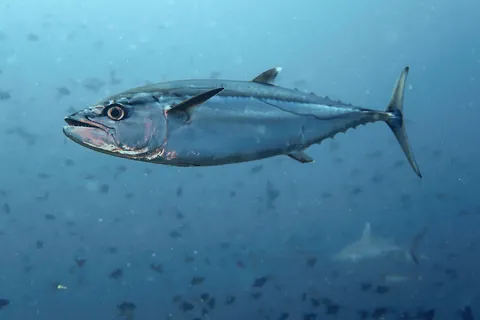
Scomberomorus maculatus
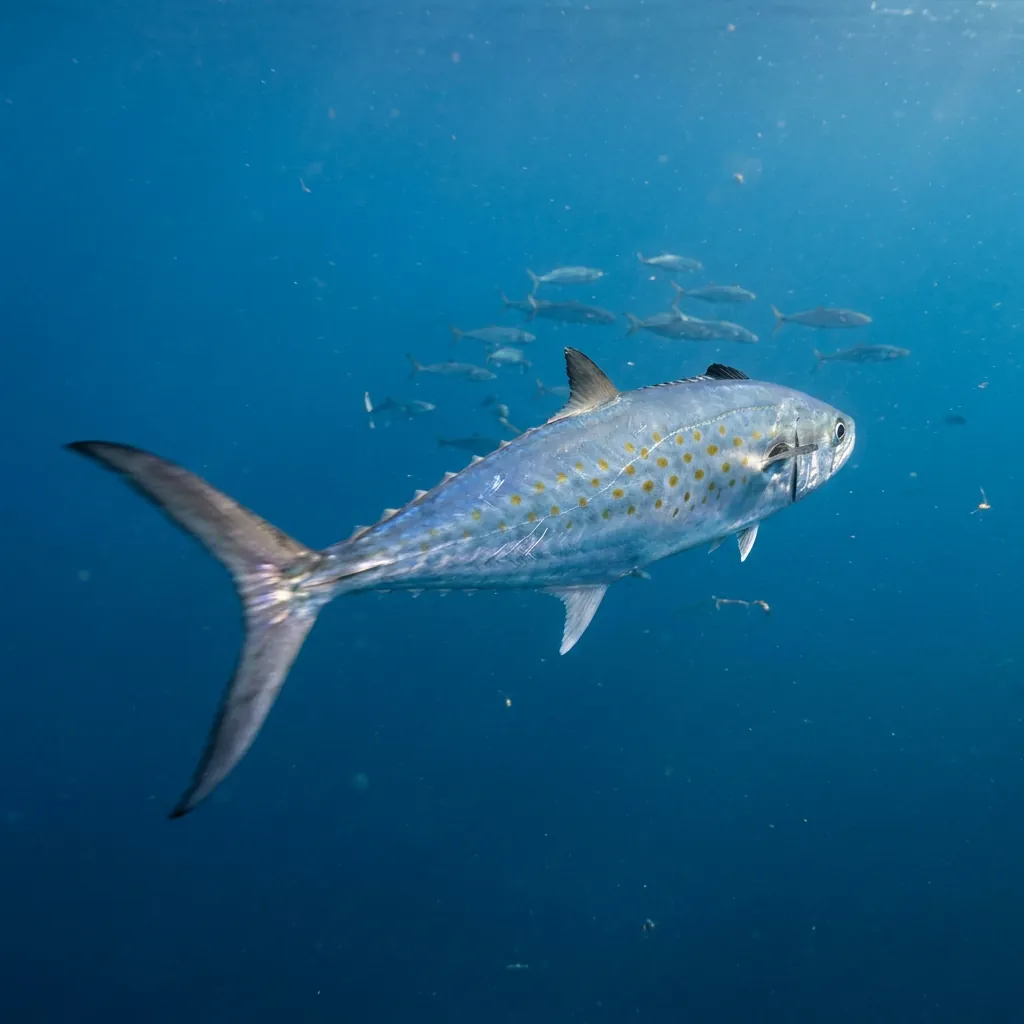
A fast, silvery hunter that flashes through open water along the US Atlantic and Gulf coasts, the Atlantic Spanish mackerel is easy to miss until the sun catches its spots.
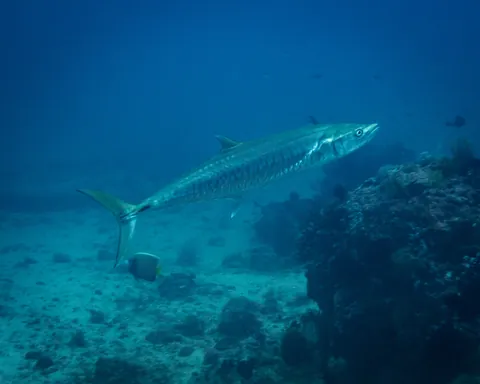
It is easily confused with the king mackerel and the cero mackerel, which share its shape and coloring. Look at the lateral line: on the Spanish mackerel it slopes down gradually, while on a king mackerel it bends sharply partway along the body. Unlike the cero mackerel, its flanks show only spots, with no yellow stripe running along the centerline.
This slim, torpedo-shaped fish has a green back and silvery sides marked with about three rows of round to oval yellow spots. A faint lateral line, the sensory stripe along its flank, curves gently down from the gill cover toward the tail. The front of the first dorsal fin is black, with the rest of that fin white edged in black. Each jaw carries a single row of flat, closely packed cutting teeth.
Spanish mackerel migrate with the seasons. An Atlantic group moves up the US coast from Florida starting in late winter, reaching as far as Massachusetts by summer before turning back in fall. A Gulf group shifts between the Florida Keys and the Texas coast in a similar seasonal loop. Spawning happens in batches, starting in spring and running into early fall depending on the group.
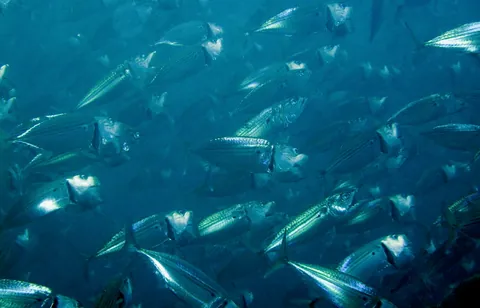
This fish hunts small schooling fish, especially anchovies and herring-like species, along with smaller amounts of shrimp and squid. Young Spanish mackerel eat proportionally more anchovies than adults do.
Describe what you saw and we name it, then keep every species you find in your Oceandex.