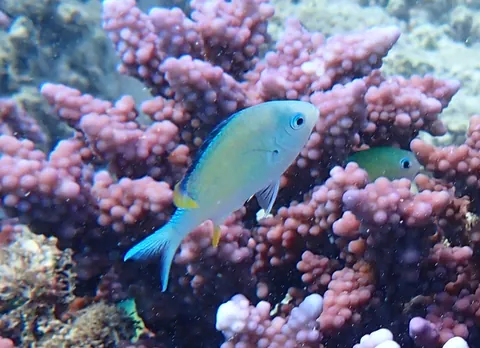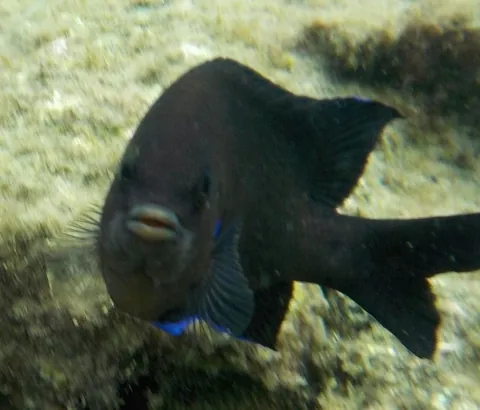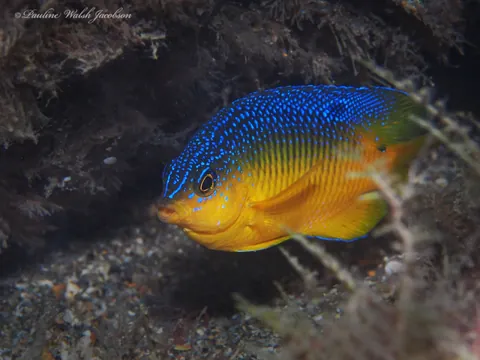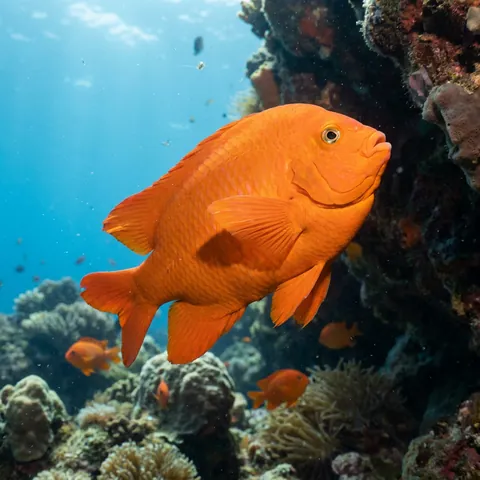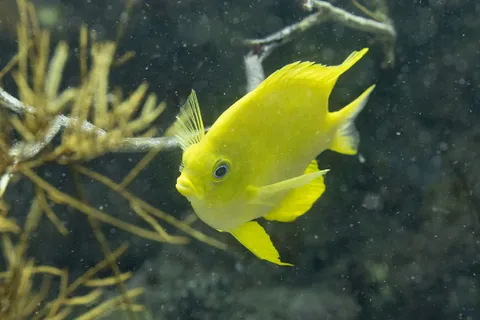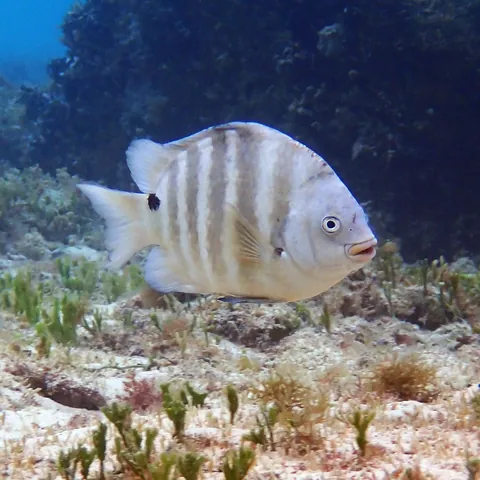
Blackspot Sergeant
Abudefduf sordidus
Abudefduf saxatilis
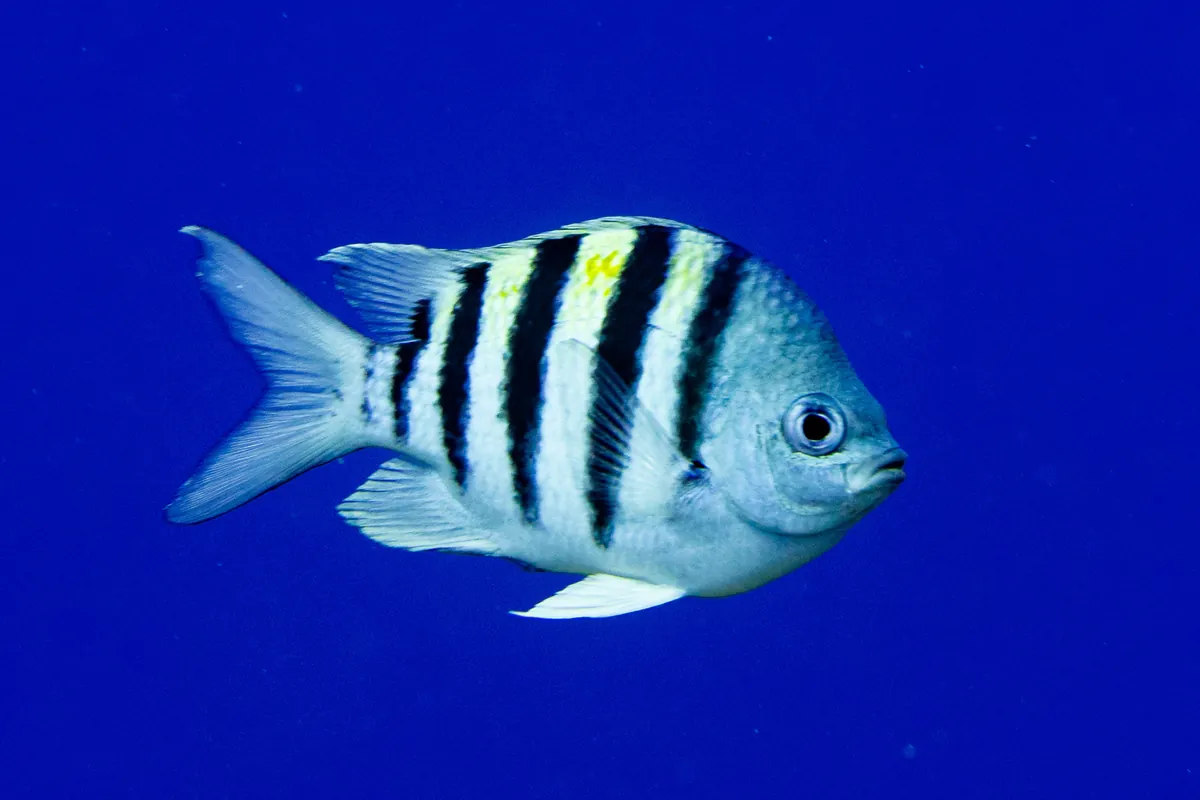
The sergeant major gets its name from the sharp black stripes across its yellow-and-white body, like an officer's insignia. It is one of the most familiar fish on shallow tropical reefs, often gathering by the hundreds.
Also known as: sargeant major
Sergeant majors are often confused with other Abudefduf species that share the same striped pattern. Look for the dark spot at the top of the pectoral fin base - a fixed mark that similar species lack.
This fish is white with a yellow top and five black or dark blue vertical stripes that narrow toward the belly, plus a faint sixth stripe sometimes visible near the tail base. There is a dark spot at the upper base of the pectoral fin. It grows to a maximum of about 22.9 centimetres, though most are closer to 15 centimetres. Adult males turn a more bluish colour, which makes their stripes harder to see, and they turn fully dark blue while guarding eggs.
Sergeant majors live on both sides of the Atlantic, from the northeastern United States and the Gulf of Mexico down to Uruguay in the west, and from Portugal to western Africa in the east. Juveniles are common in shallow tide pools, while adults gather over coral reefs down to about 20 metres.
This fish forms large shoals, sometimes hundreds strong. It gets cleaned of parasites by small cleaner fish, and will even clean parasites and shed skin off green sea turtles alongside surgeonfish. Groupers and wrasses are among its predators.
Sergeant majors eat a broad mix of zooplankton, invertebrate larvae, small crustaceans, small fish, and algae.
Males build nests on rocks, reef outcrops, shipwrecks, and pilings, then chase and court females that come to lay their eggs there. A female can release around 200,000 eggs, which stick to the surface by a filament and turn greenish after a few days. The male guards the eggs alone for about a week, turning bluish in colour while he does.
In at least one population, sergeant majors have been seen feeding on the waste and vomit of spinner dolphins.
Describe what you saw and we name it, then keep every species you find in your Oceandex.