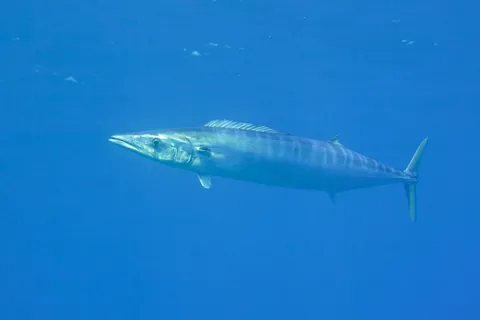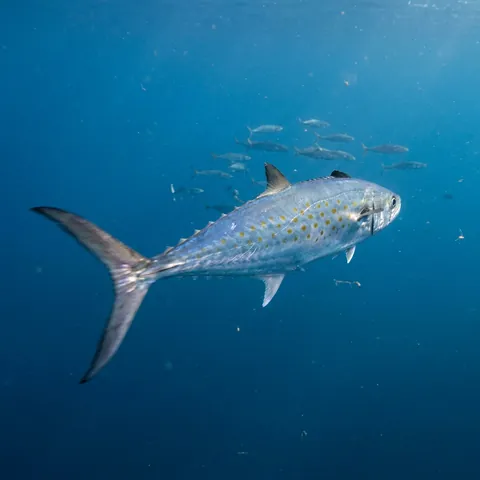
Atlantic Spanish Mackerel
Scomberomorus maculatus
Scomber scombrus
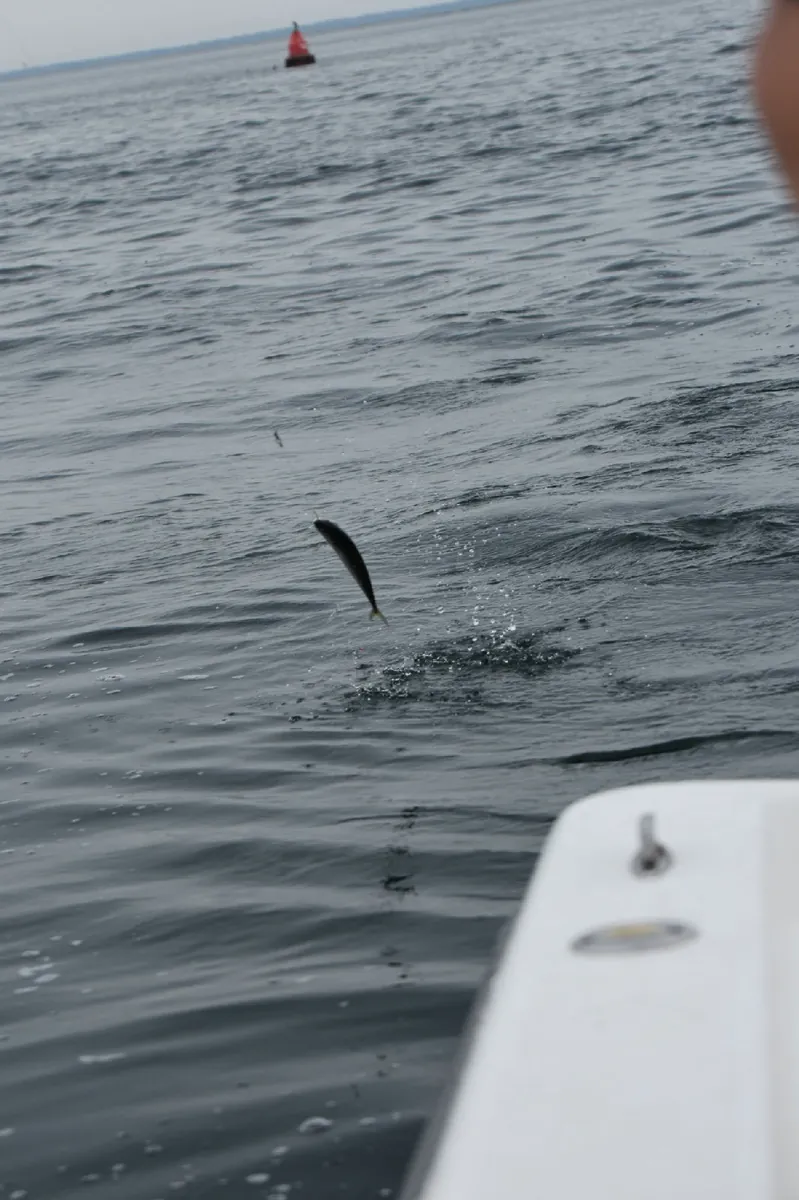
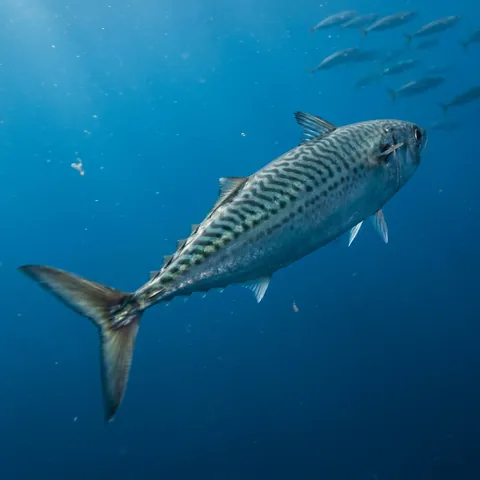
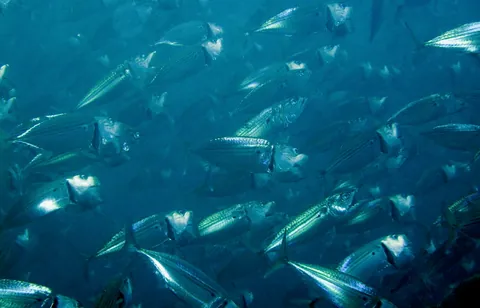
The Atlantic mackerel is a sleek, fast-swimming fish that travels in huge schools through open water, always on the move to keep oxygen flowing over its gills.
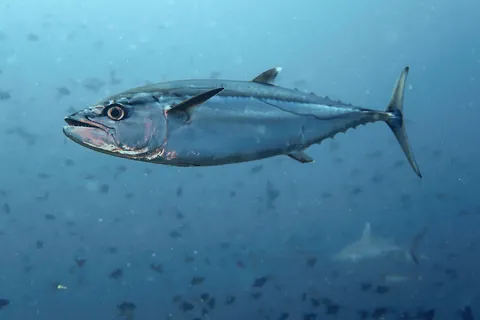
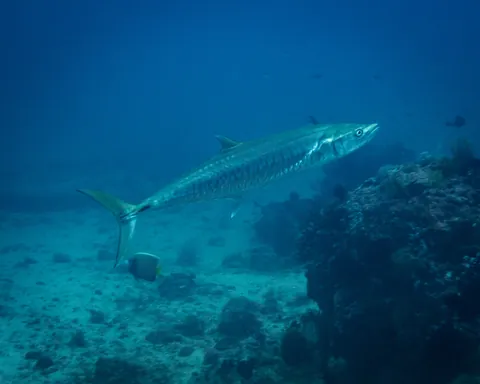
It can be confused with other mackerel species that share its range. A useful clue is behaviour: this species stays close to the surface without leaping clear of the water, something other mackerels do more readily.
This fish has a slim, torpedo-shaped body with a long, pointed snout and large eyes. Its back is steel-blue with wavy black lines running across it, fading to silvery-white or yellow underneath, sometimes with darker patches. Small scales give the skin a velvety feel. Two dorsal fins sit well apart along its back, each followed by a row of small finlets, and the body narrows to a slender base before the tail.
It lives in the temperate Atlantic, plus the Mediterranean, Black, and Baltic Seas, moving with the seasons. In spring and summer it gathers closer to shore, then in autumn and winter it heads back out to warmer water at the edge of the continental shelf.
This fish keeps swimming constantly and never stops to rest, using quick beats of its tail. It gathers in large schools of similar-sized fish near the surface for most of the year, only breaking this pattern in winter. Unlike some other mackerels, it does not leap from the water unless it is fleeing a predator.
It feeds mainly on copepods, tiny crustaceans that drift in the plankton. When hunting plankton, the school packs tightly together and each fish opens its mouth wide, so the group filters the water like a row of small nets.
This species is listed as Least Concern, helped by its huge range and large numbers, though catches rise and fall in cycles. Scientists still recommend watching the population closely, since climate change could affect where and how many mackerel gather.
In Spain, this fish's common name, caballa, is also used as a nickname for people from the city of Ceuta.
Describe what you saw and we name it, then keep every species you find in your Oceandex.