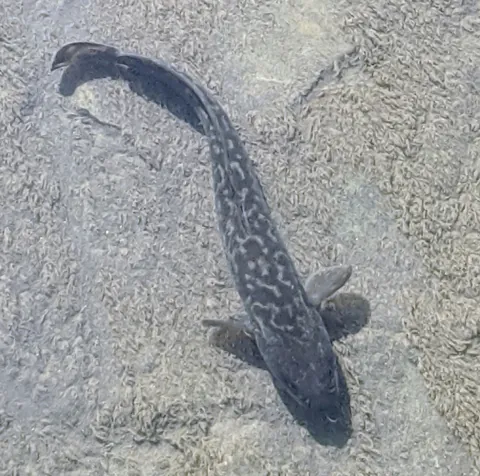
Burbot
Lota lota
Gadus morhua
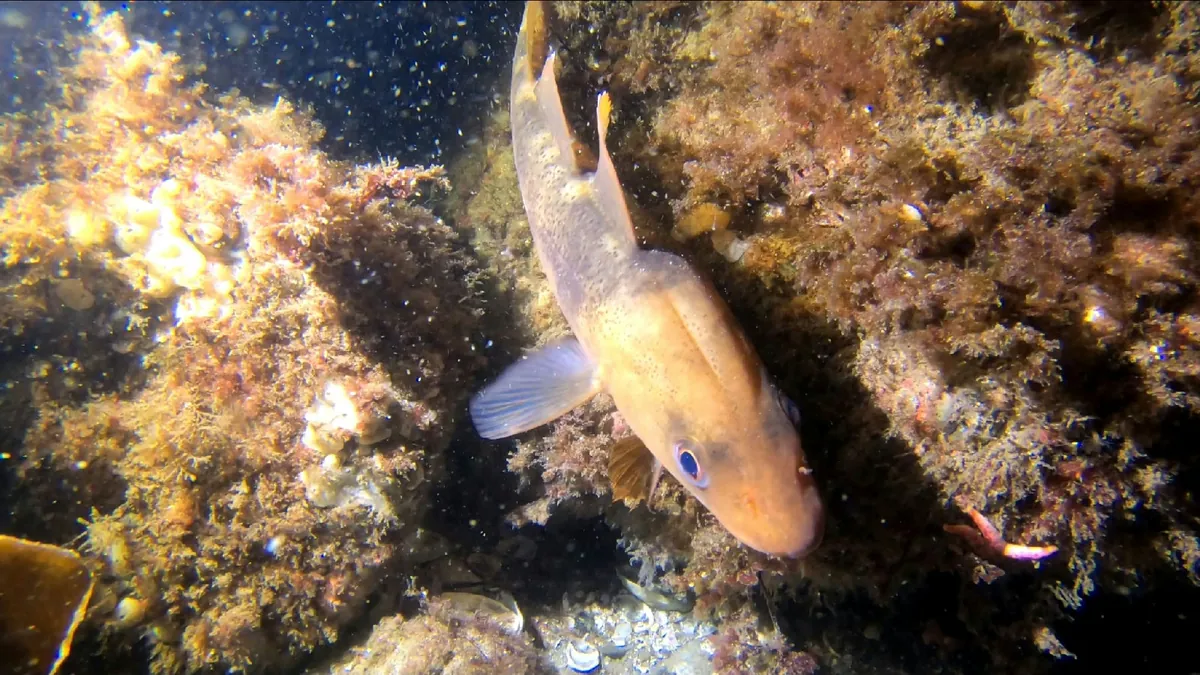
The Atlantic cod is a large bottom-dwelling fish that has shaped North Atlantic fishing for centuries. It can reach 200 cm long and 96 kg in weight, though most adults are smaller.
Several brownish bottom-dwelling fish look similar to this species. Its clearest mark is the pale stripe running the length of its lateral line, standing out sharply against the darker, spotted body.
This fish is brown or green on top with dark spots along its back, shading to silver on its belly. A pale stripe runs clearly along its side, marking the lateral line, the organ it uses to sense vibration in the water.
Cod swim in large shoals organised by size, with bigger fish often acting as scouts that lead the group, especially when moving inshore to feed after spawning. Adults have few predators and sometimes eat smaller, juvenile cod. Young cod avoid this risk by hiding among coarse, stony ground when a predator is nearby, switching to open sand or gravel when it feels safe.
Cod eat a wide range of prey, including herring, capelin, sand eels, squid, mussels, clams, and small bottom animals such as brittle stars and sea cucumbers. Young cod feed mostly on crustaceans, while larger adults switch mainly to fish, and adult cod will sometimes eat juveniles of their own species.
Cod spawn from January to May, often migrating to grounds set apart from where they normally feed. Males gather and compete for status, using sound and display to attract mates, and females choose a partner from among them. Each female releases her eggs in several batches over time, and the fertilised eggs and larvae then drift freely with the current.
harmless
Male cod compete for status at spawning grounds much like lekking birds, using sound to try to win a female's attention, and females then choose their mate based on that display.
Describe what you saw and we name it, then keep every species you find in your Oceandex.