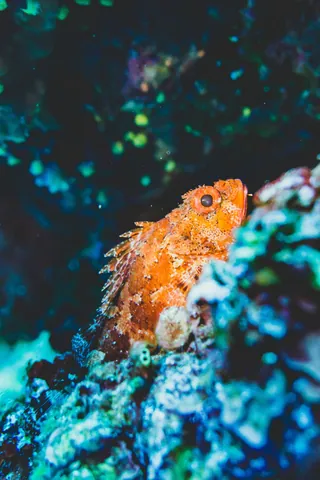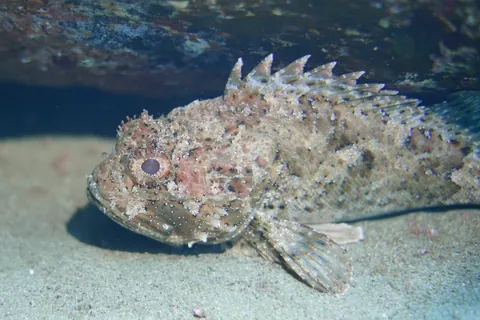
Black Scorpionfish
Scorpaena porcus
Scorpaena plumieri
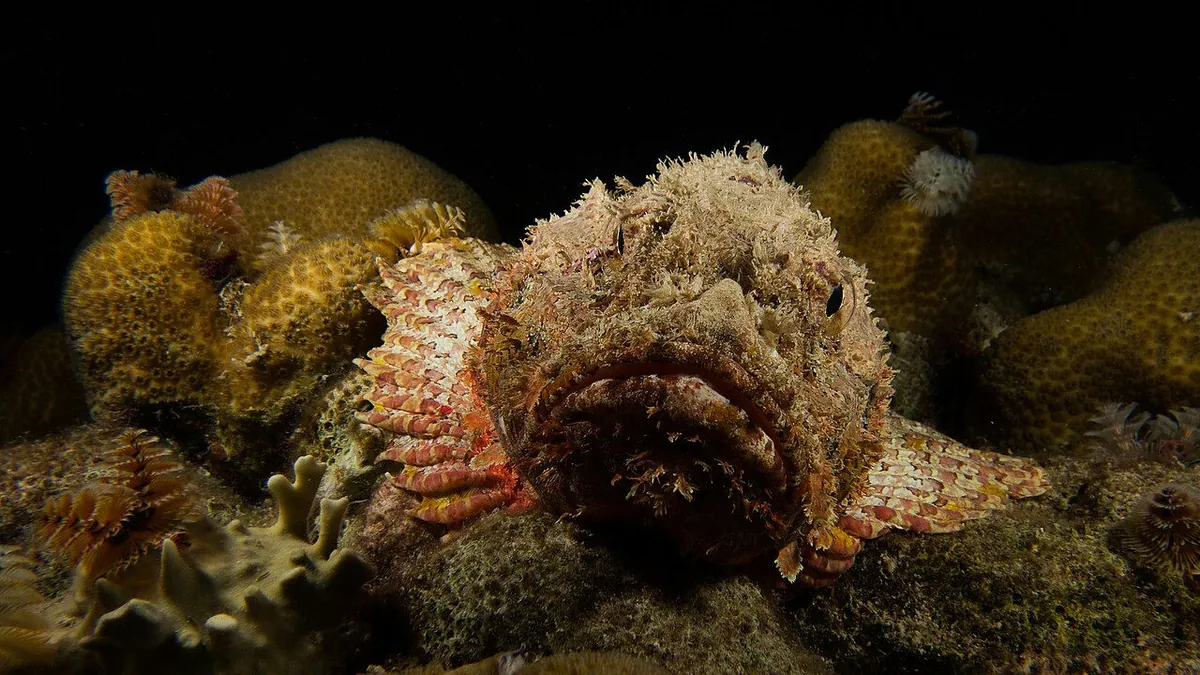
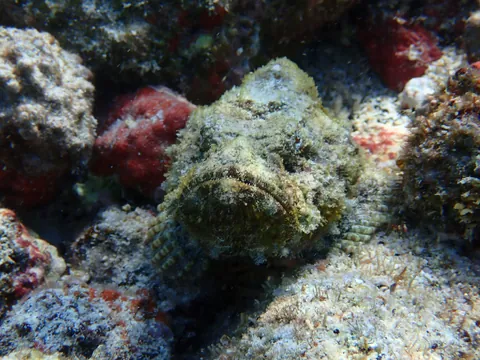
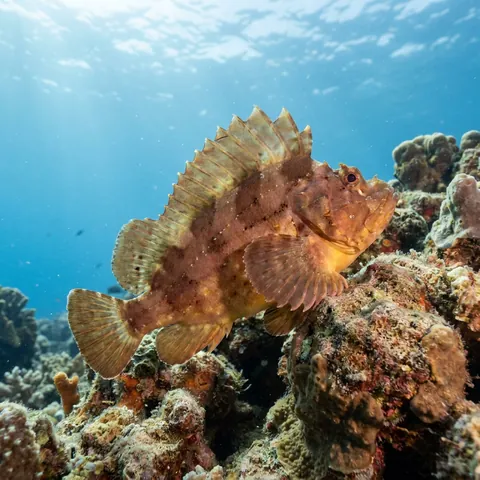
Well camouflaged against reef rock, the spotted scorpionfish spends most of the day sitting perfectly still in plain sight. It is the largest scorpionfish in the Atlantic and Caribbean, growing to 45 cm, yet many divers swim right past one without ever noticing it.
Also known as: lion fish
Scorpionfish are easy to mistake for a lump of rock or coral rubble. If disturbed, this species flashes bright white spots on the dark inner surface of its pectoral fin base, a mark not shown by similar-looking scorpionfish.
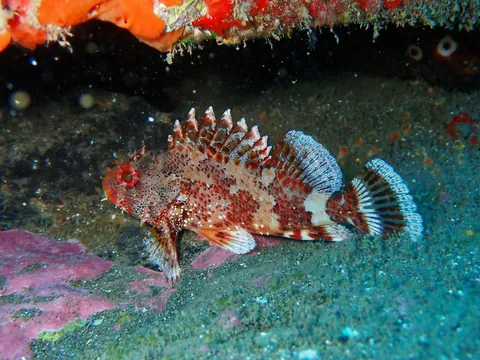
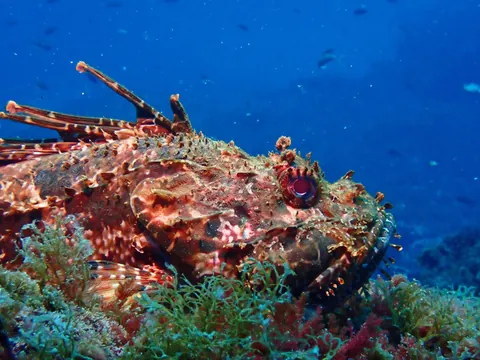
This scorpionfish has a heavy, robust body in mottled shades of brown to black, with the area just before the tail turning noticeably paler. Its head carries dark spots, and fleshy skin flaps called cirri hang under the eyes and around the chin. The pectoral fins are broad and fan-shaped, and all the fins show dark bands and spots, often on a greenish background, with dark bars near the end of the tail fin.
It lives on shallow coral reefs and rocky ground across the western Atlantic, from Bermuda down to Brazil, and is also found off Ascension Island and St Helena in the eastern Atlantic. It usually settles between about 5 and 55 metres deep, lying still on the bottom rather than swimming around.
The spotted scorpionfish lies motionless on the bottom, blending into its surroundings while it waits for prey. Its dorsal fin spines carry venom strong enough to cause severe pain and a drop in blood pressure in anyone who brushes against it, so divers should never touch or handle it. Snappers such as the schoolmaster and mutton snapper are among its few predators.
It does not chase its food. Instead it waits in ambush, using its large mouth to suck in fish and crustaceans that stray too close.
In parts of Brazil this fish is caught and eaten, and locals say the meat tastes a little like chicken.
Describe what you saw and we name it, then keep every species you find in your Oceandex.