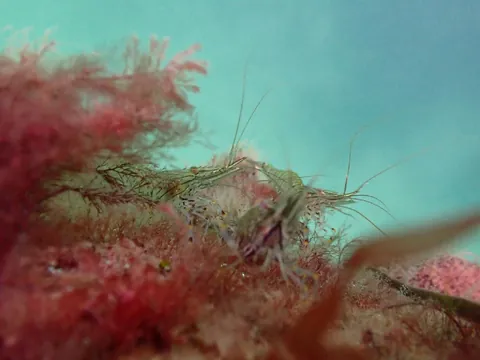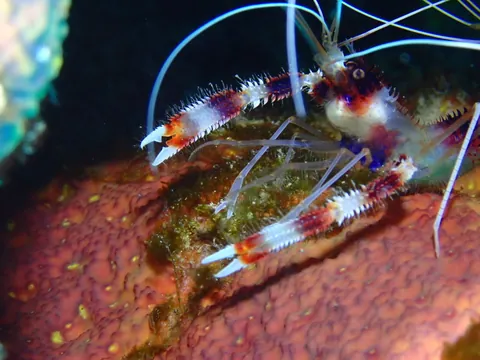
Banded Coral Shrimp
Stenopus hispidus
shrimps
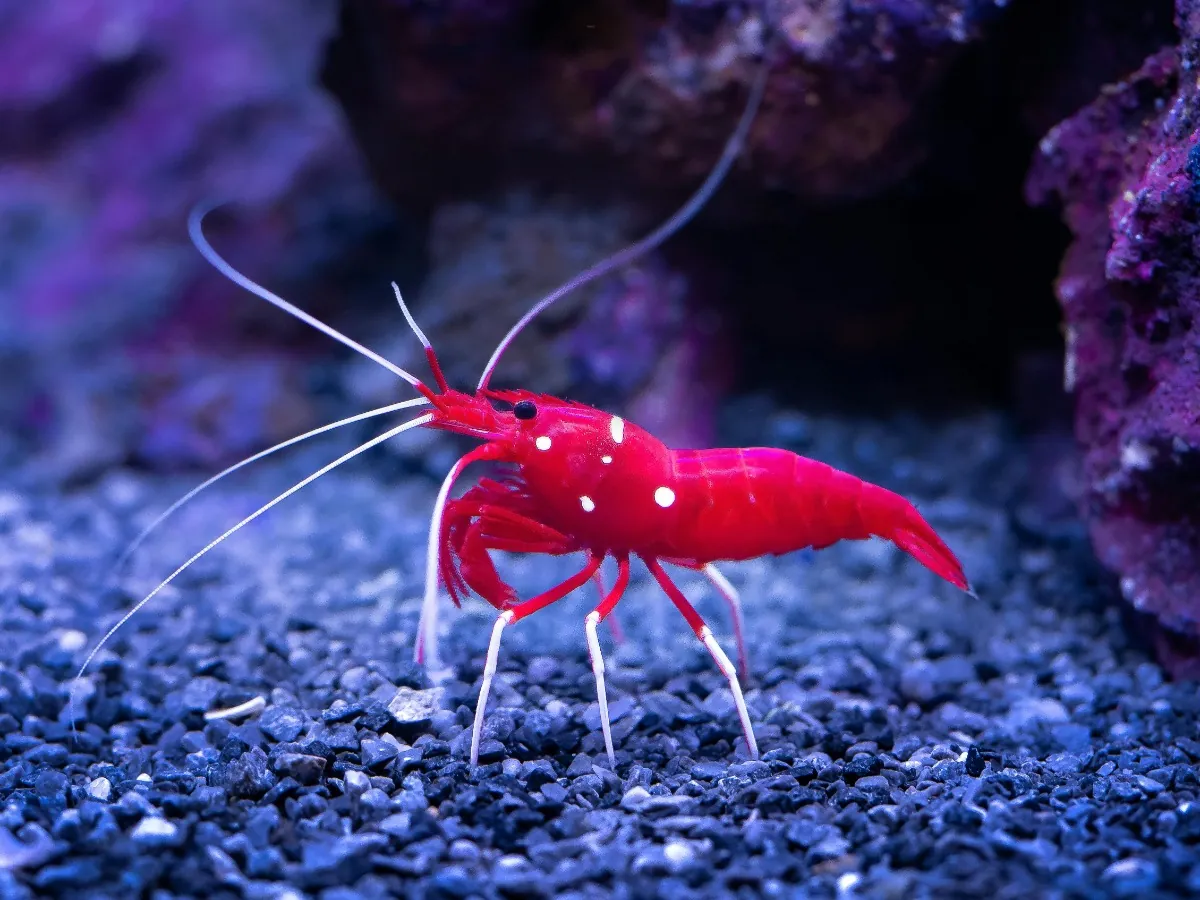
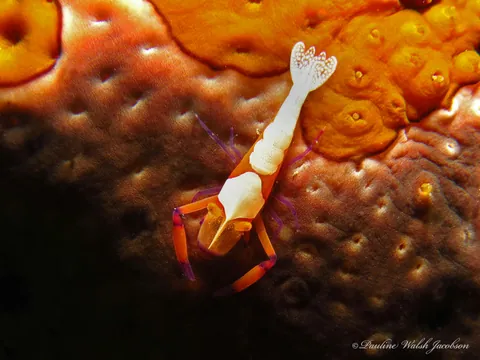
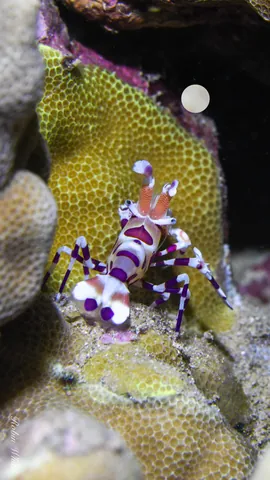
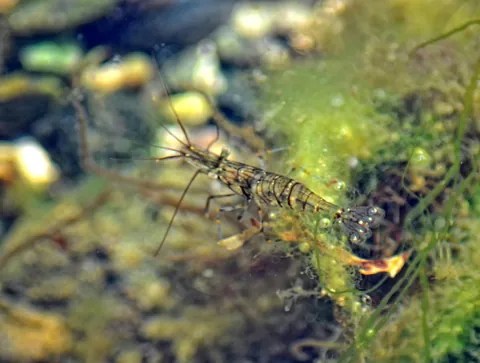
Shrimp are small, many-legged crustaceans found in almost every underwater habitat. In this app the group includes the banded coral shrimp, the scarlet cleaner shrimp, and the harlequin shrimp.
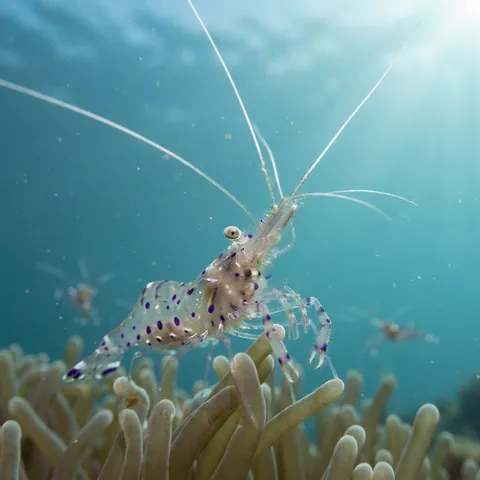
Look for a small, many-legged animal with a curved, segmented body, stalked eyes, and long antennae, often tucked into a crevice, anemone, or sea star. This body shape, especially the curved abdomen and long whiskers, is the clearest sign of a shrimp rather than a crab. Members are told apart by colour pattern, claw size and shape, and which animal they are living on or near.
A shrimp's body has a hard shell over the head and thorax, called the carapace, and a long, curved abdomen behind it. A pointed beak-like spike, the rostrum, sticks out at the front between two eyes on stalks. Shrimp also have two pairs of whisker-like antennae, one pair often much longer than the body, and several pairs of legs.
Shrimp live in almost every water habitat, from shallow coasts and estuaries to depths of 5,000 metres, and from the tropics to the poles. Most species are marine, but some live in rivers, lakes, or fresh water instead.
Shrimp behaviour varies a lot across the group. Some, like pistol shrimp, have one large claw that snaps loudly to stun prey, while others, such as cleaner shrimp, groom parasites and dead skin off reef fish. Some species also live closely with other reef animals, such as sea slugs or sea cucumbers.
Most shrimp are omnivores that eat a wide range of food. Some filter tiny food particles from the water with bristly legs, some scrape algae off rocks, and cleaner shrimp feed on parasites and dead tissue from other animals.
Pistol shrimp have one oversized claw that snaps shut so fast it makes a loud popping sound, and huge colonies of these shrimp are one of the biggest sources of noise in the ocean.
Describe what you saw and we name it, then keep every species you find in your Oceandex.