Crown Squirrelfish
Sargocentron diadema
Sargocentron spiniferum
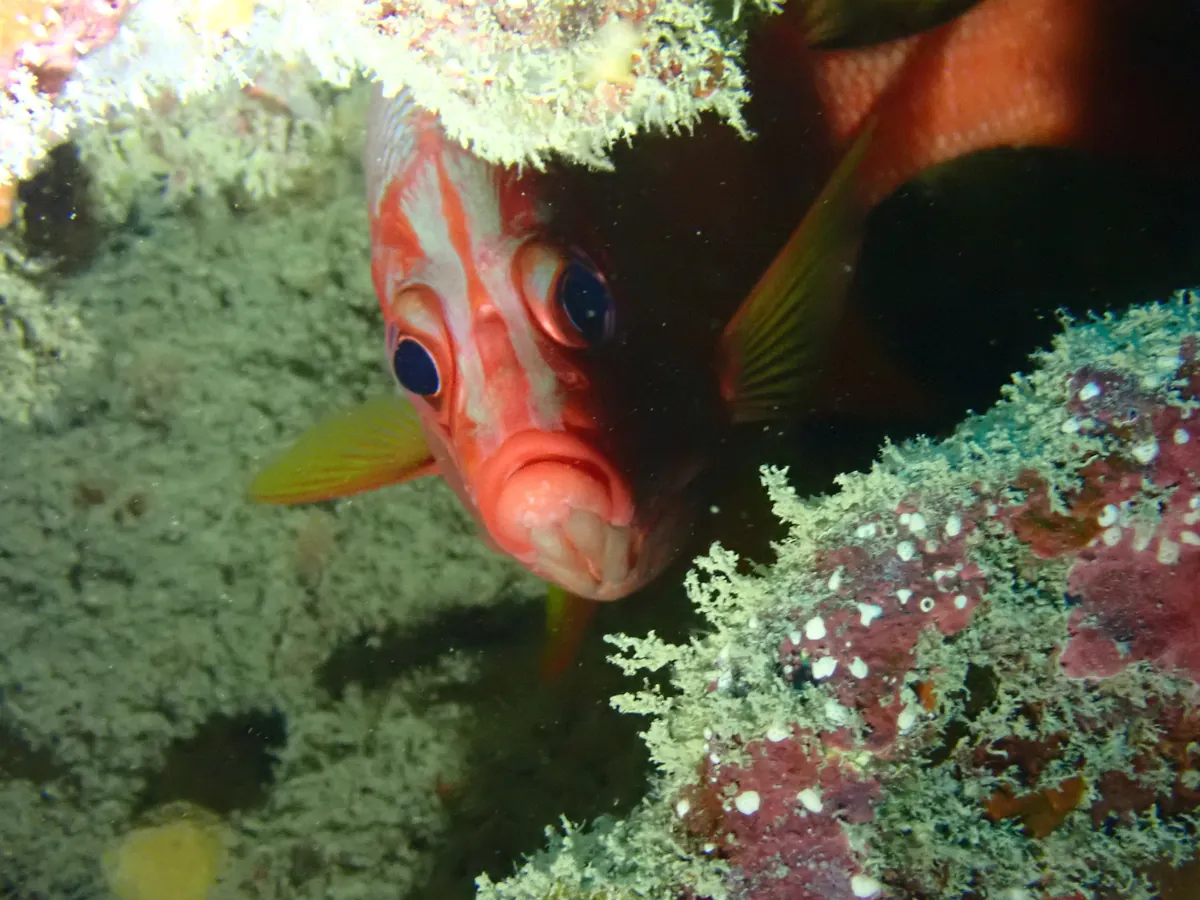
The sabre squirrelfish is the largest member of its family, a big-eyed, bright red reef fish built for hunting after dark. It can grow to 51 cm and weigh up to 2.55 kg, with most adults closer to 35 cm.
Also known as: long-jawed squirrelfish, sabre squirrelfish, spinecheek squirrelfish, spiny squirrelfish, longjaw squirrelfish, long-jawed squirrelfish, squirrelfish, spiny squirrelfish, spiny squirrelfsih, spinecheek squirrelfish, soldierfish, sabre squirrelfish, long jawed squirrelfish, indo-pacific longjaw squirrelfish, spiny squirrel-fish
Several red squirrelfish share Indo-Pacific reefs, but this species is the biggest of them. If you get a close look, check the spine at the back corner of the gill cover: on the sabre squirrelfish it is unusually long, clearly longer than the fish's eye is wide.
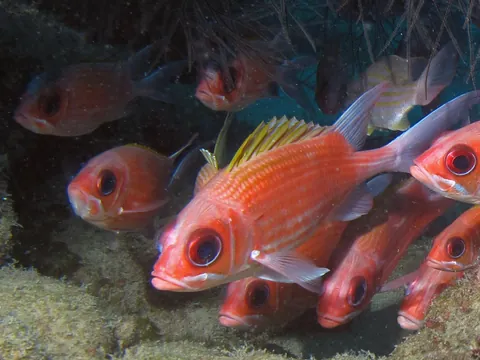
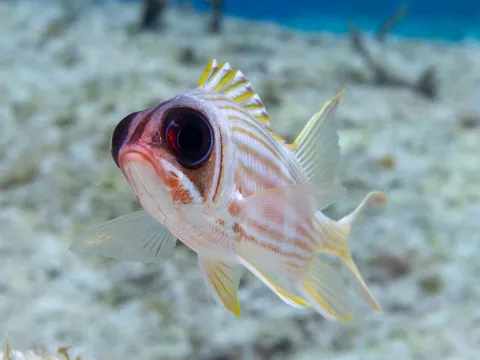
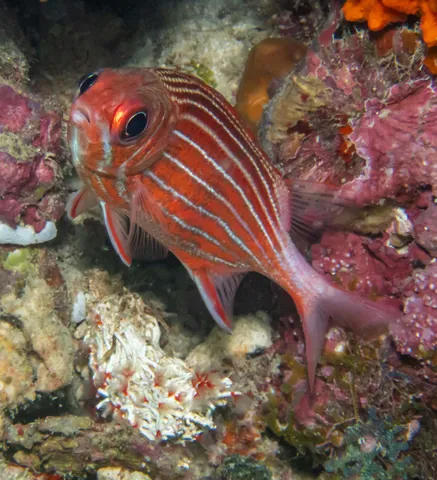
This squirrelfish has an oval, flattened body in an overall bright red, with silvery edges on each scale. A deep red patch sits just behind the eyes, and the spiny dorsal fin along its back stands tall. The lower jaw juts out slightly past the upper one, and the tail fin is clearly forked. The anal and ventral fins are yellowish, and a sharp spine projects from the corner of the gill cover.
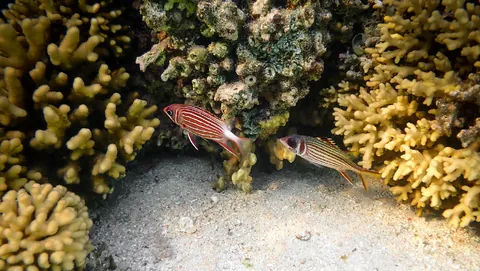
Sabre squirrelfish live across the tropical Indo-Pacific, from the Red Sea and Indian Ocean to Hawaii, Japan, and southern Australia. They inhabit coral reefs from reef flats to lagoons and seaward slopes, from the shallows down to about 122 metres. By day they shelter under ledges, coming out at night to hunt; juveniles stay in shallow, sheltered reef areas.
The spine at the back corner of its gill cover is venomous, capable of giving a painful sting if the fish is handled.
Describe what you saw and we name it, then keep every species you find in your Oceandex.