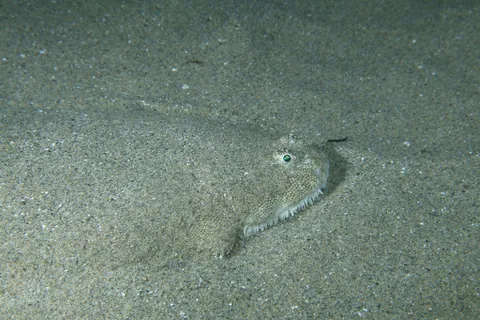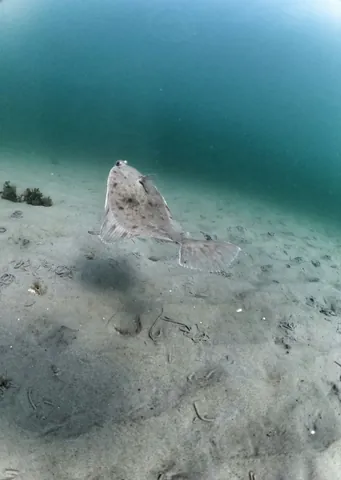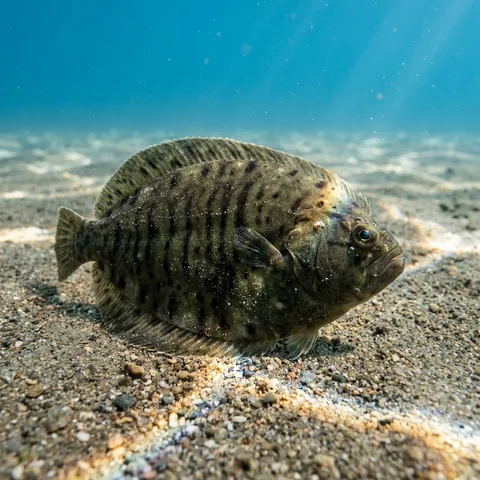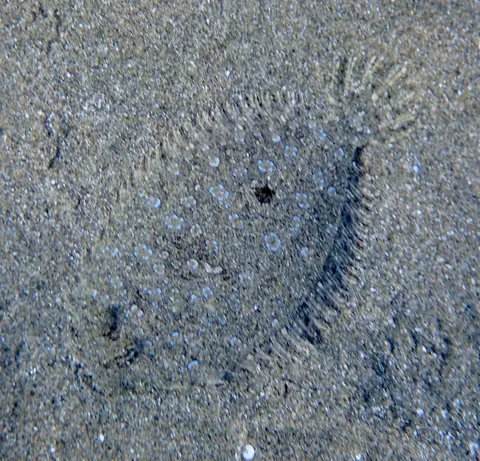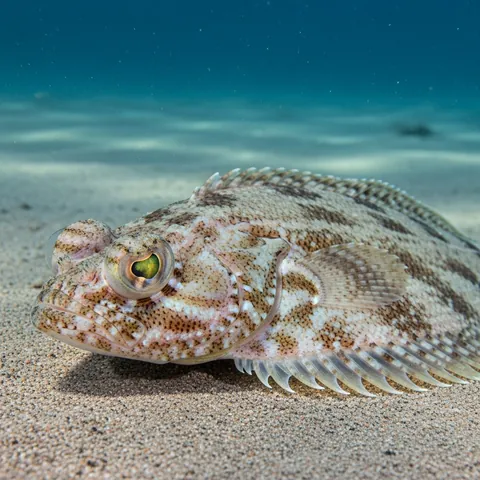
Cape Scaldfish
Arnoglossus capensis
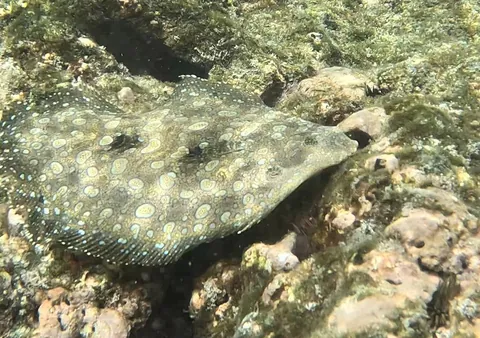
Bothus lunatus
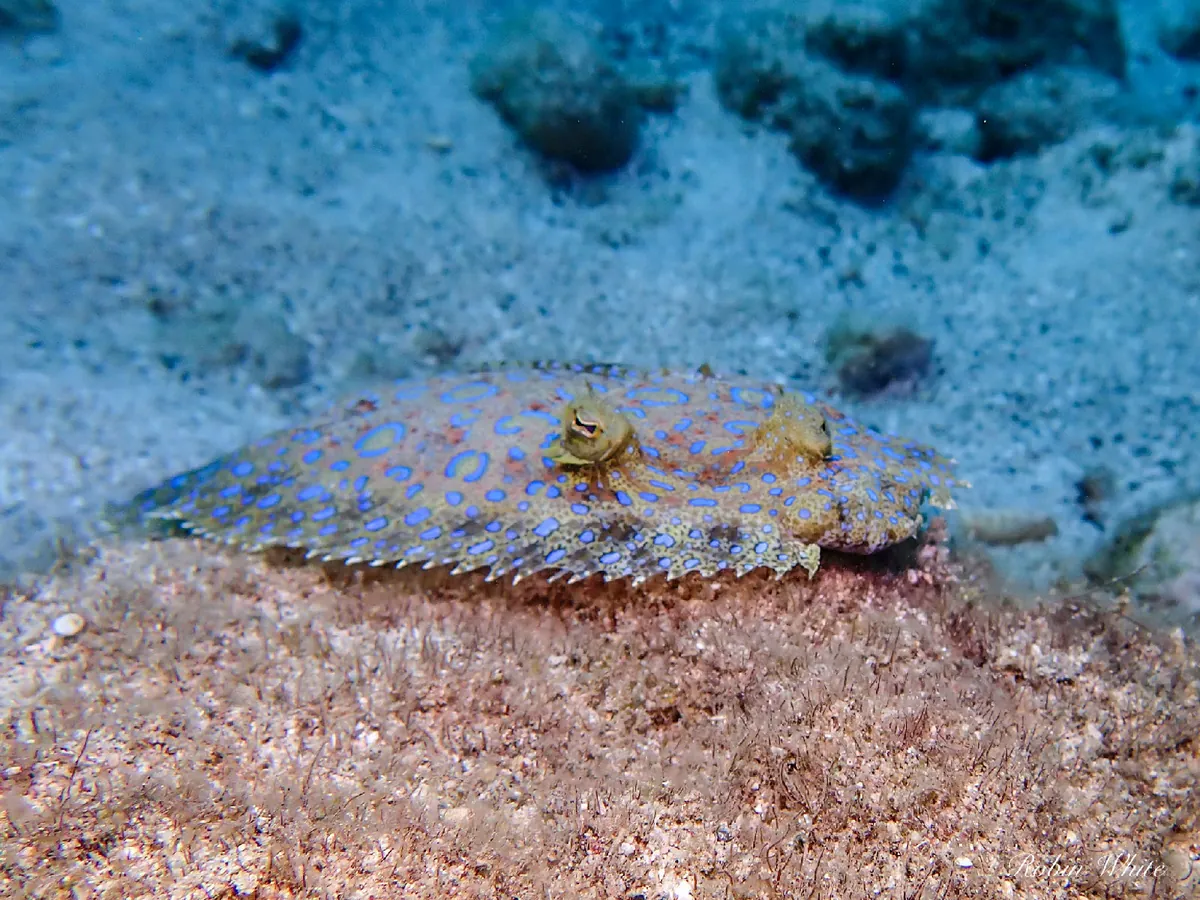
The plate fish, also called the peacock flounder, lies flat on sandy patches near the reef, changing colour to melt into the seabed. It grows to a common length of 35 cm, with a maximum of 46 cm.
Also known as: bothus lunatus, flounder, peacock flounder, solefish
Camouflaged flatfish are easy to overlook or mix up. Look for two or three faint dark patches along the plate fish's lateral line, the straight line running down its side, which stay fixed even as its colour shifts.
This flounder has a round, flattened body with both eyes on its upper left side, set on short stalks. Its dorsal and anal fins run almost all the way around its body. It is grey, brown, or tan with small blue spots and circles across its head, body, and fins, and it can shift its background colour to match the seabed within seconds.
Plate fish live over sandy patches near coral reefs, in seagrass beds, and near mangroves, usually no deeper than 20 m. They are one of the most common flounders found around reefs in the Caribbean and tropical Atlantic.
This flounder lies still on the sand, often half buried, and darts out to ambush fish, mantis shrimp, and small octopuses that come too close. When it does swim, it moves in short glides low over the rippled sand.
harmless
A small Caribbean octopus, Macrotritopus defilippi, copies the plate fish's burst-swimming style, likely to trick predators into thinking it is a flounder rather than easy prey.
Describe what you saw and we name it, then keep every species you find in your Oceandex.