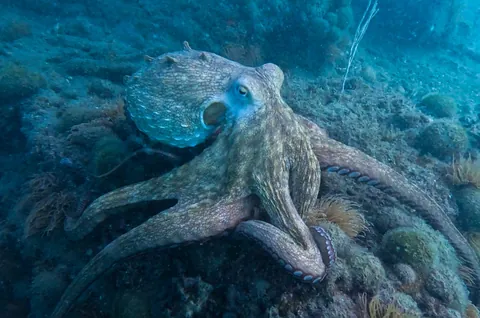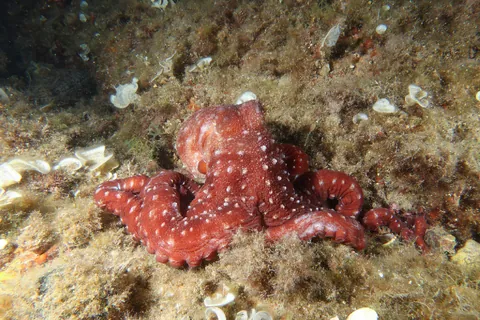
Atlantic White-spotted Octopus
Pinnoctopus macropus
octopus
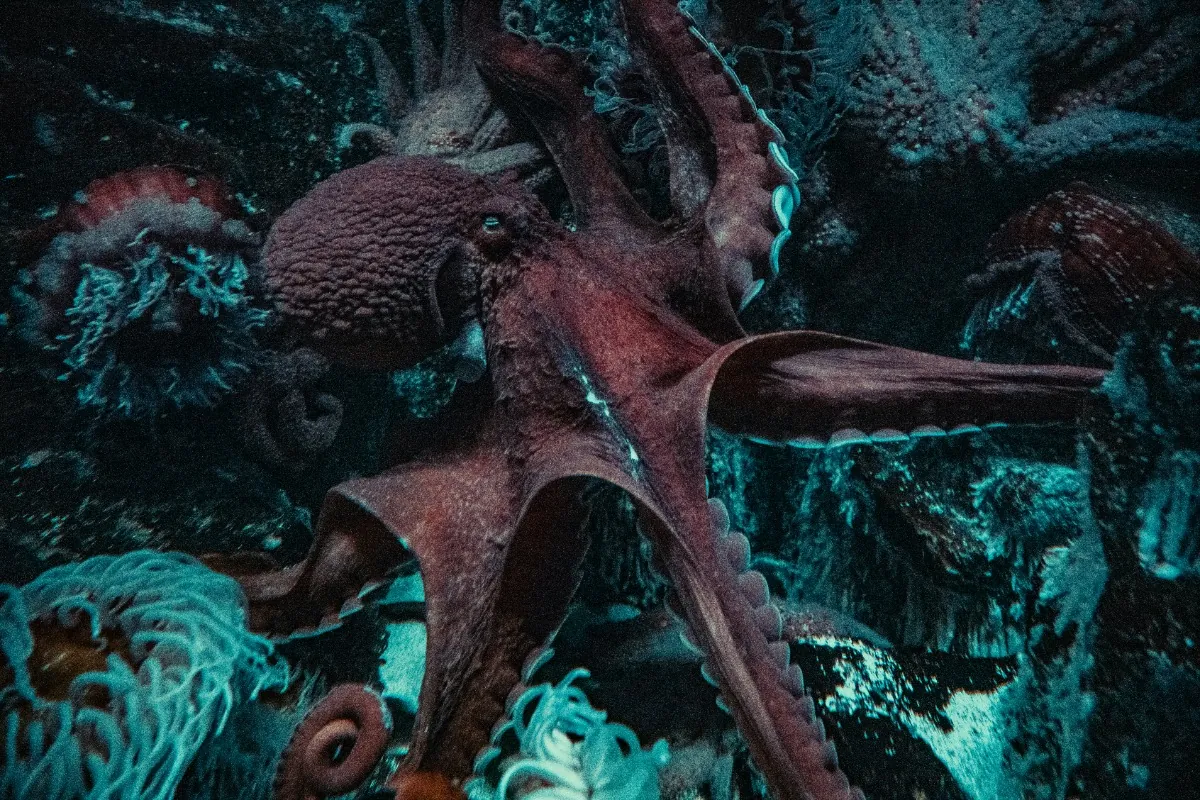
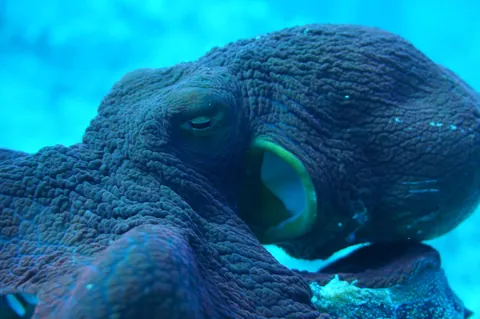
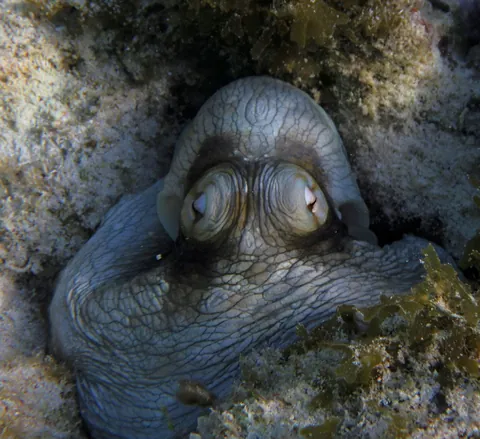
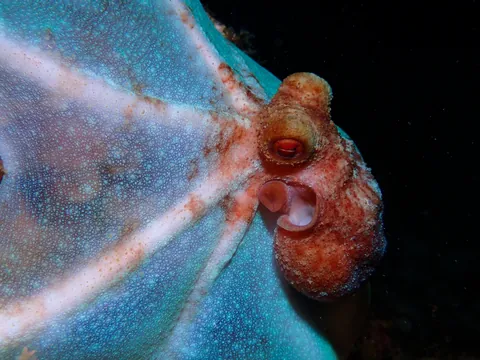
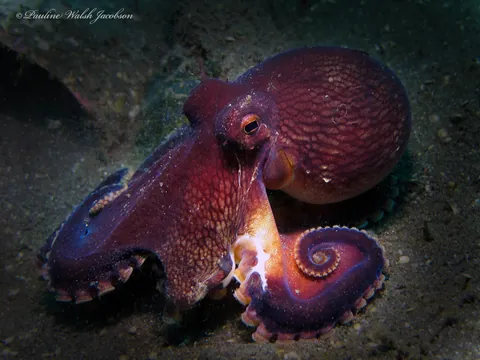
Octopuses are soft-bodied, eight-armed animals known for their intelligence and skill at camouflage. In this app the group includes the big blue octopus, the common octopus, and the coconut octopus.
Look for a soft-bodied animal with eight arms and no shell, often changing colour or texture to blend into the reef or rock around it. This mix of soft body, eight arms, and rapid camouflage sets octopuses apart from squid and cuttlefish, which have ten arms and often swim more in open water. Members are told apart mainly by size, arm length, skin texture, and colour pattern.
Octopuses have a soft, rounded body with eight flexible arms joined near the base by webbing. The mouth, with a sharp beak, sits underneath where the arms meet. Size varies hugely: the smallest species is only about 2.5 cm long, while the giant Pacific octopus can span nearly 5 metres across its arms.
Octopuses live in every ocean and in many kinds of habitat. Some live in shallow tide pools or on coral reefs, others in seagrass beds, and some live much deeper, even near hydrothermal vents. No species live in fresh water.
Octopuses have a large, complex nervous system, with most of their nerve cells spread through their arms rather than the brain. This lets each arm sense and react on its own. Their skin can change colour and pattern almost instantly to match their surroundings and hide from predators.
Octopuses are predators that eat crustaceans, clams, snails, fish, and sometimes other octopuses. Many hunt by feeling through their surroundings or ambushing prey, then drilling into shells to kill and eat what is inside.
Male octopuses use a specialised arm to pass a packet of sperm into the female, and fertilisation happens inside her body or in the water nearby. How and when octopuses breed depends on conditions such as temperature and light.
Octopuses carry some of the same 'jumping genes' found active in the human brain, a case of evolution finding a similar solution twice.
Describe what you saw and we name it, then keep every species you find in your Oceandex.