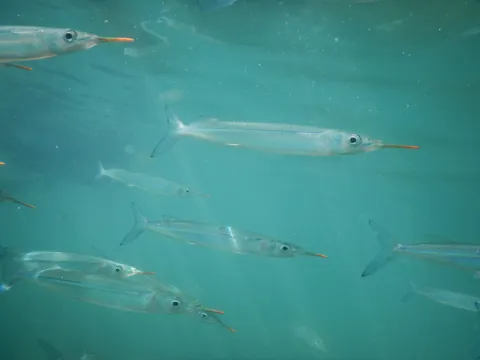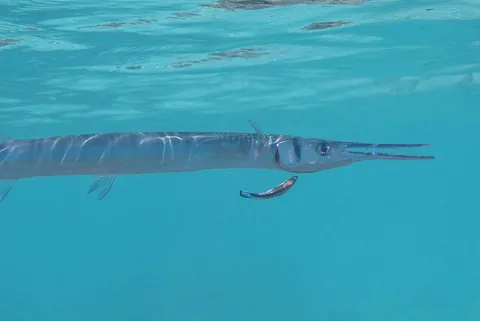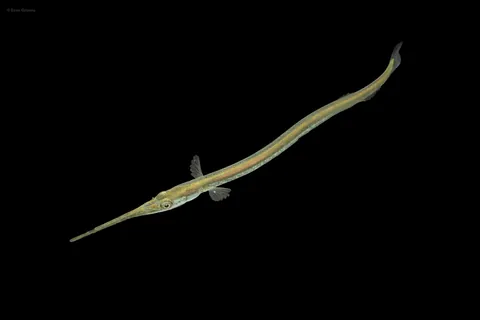
Atlantic needlefish
Strongylura marina
garfish
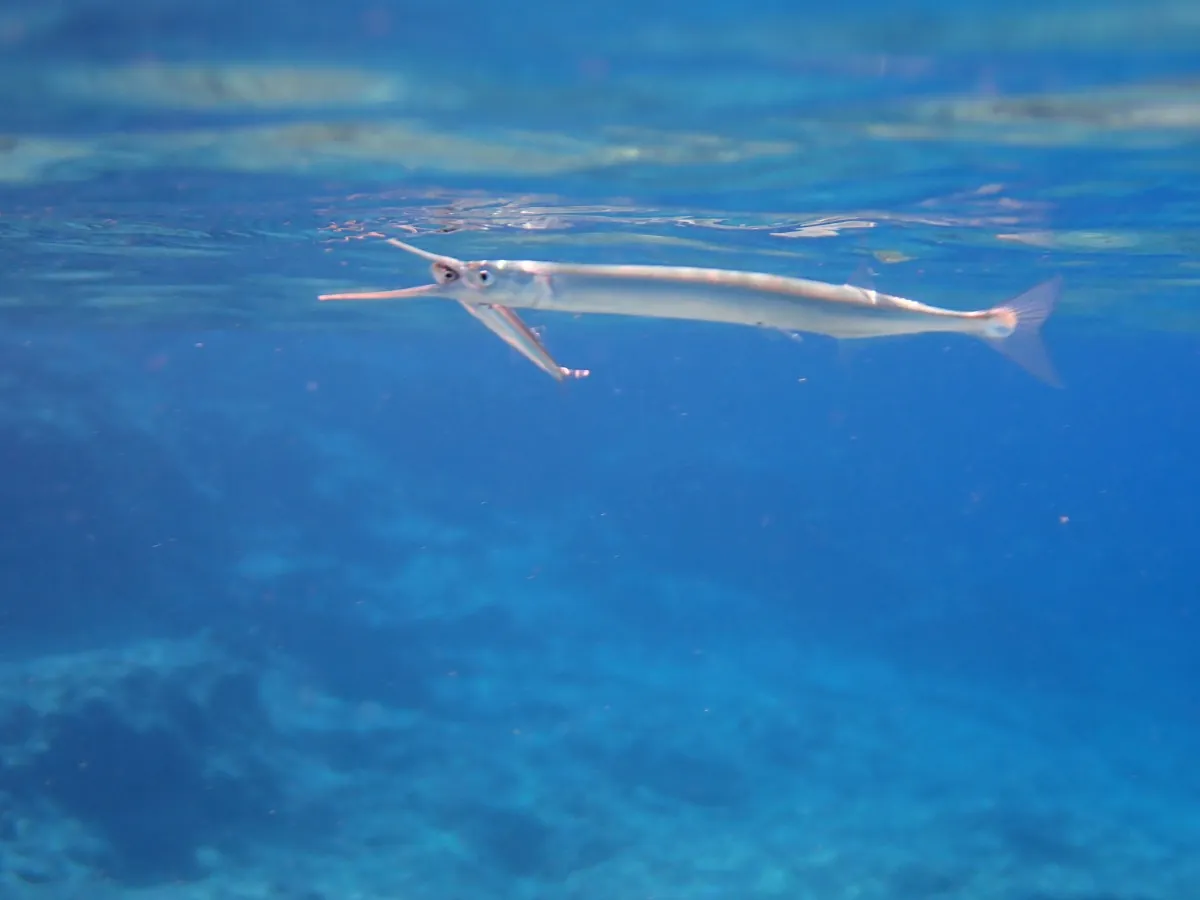
Needlefish are thin, torpedo-shaped fish with a long, tooth-lined beak, often seen just under the surface. In this app the group includes the houndfish, the Atlantic needlefish, and the garfish.
Look for a very thin, silvery fish swimming near the surface with a long, needle-like beak full of small teeth. This slim shape and beak set them apart from other surface fish such as garfish look-alikes, which are only distantly related despite the similar name. Members differ mainly in size and in how far the beak extends.
Needlefish have a very slender body, from about 3 cm to nearly a metre long, with a single fin set far back near the tail. Their most obvious feature is a long, narrow beak lined with sharp teeth. In young needlefish, only the lower jaw is long, giving them a half-beak look, and the upper jaw grows to match as they mature.
Needlefish are most common in subtropical seas, though some live in cooler temperate waters, especially in winter. Most live in shallow marine water at the surface, but some species also live in brackish water, and a few kinds live only in freshwater rivers and streams.
Needlefish hunt by chasing down smaller fish, sometimes leaping at a shallow angle to ambush prey near the surface.
Needlefish feed mainly on smaller fish. Some species also eat krill, swimming crustaceans, small squid or octopus, and insects.
Needlefish reproduce by mating and laying eggs. During mating, the male usually rides on top of the female as they swim through the waves.
Needlefish can leap out of the water at speeds up to 60 km/h, and they are drawn toward artificial light at night, sometimes leaping straight at boats, torches, or divers.
Describe what you saw and we name it, then keep every species you find in your Oceandex.