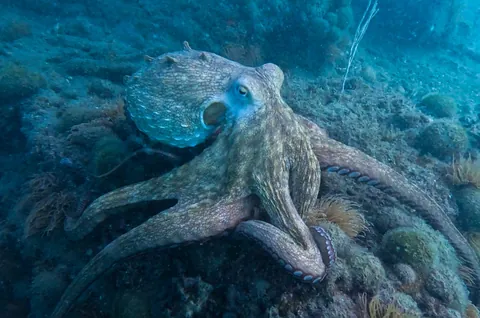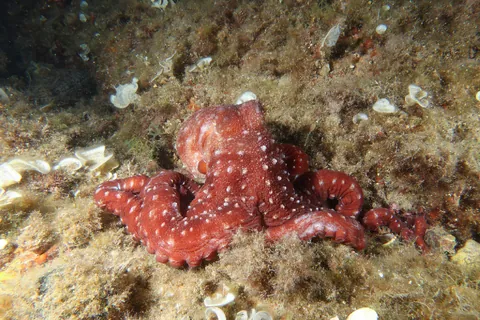
Atlantic White-spotted Octopus
Pinnoctopus macropus
Enteroctopus dofleini
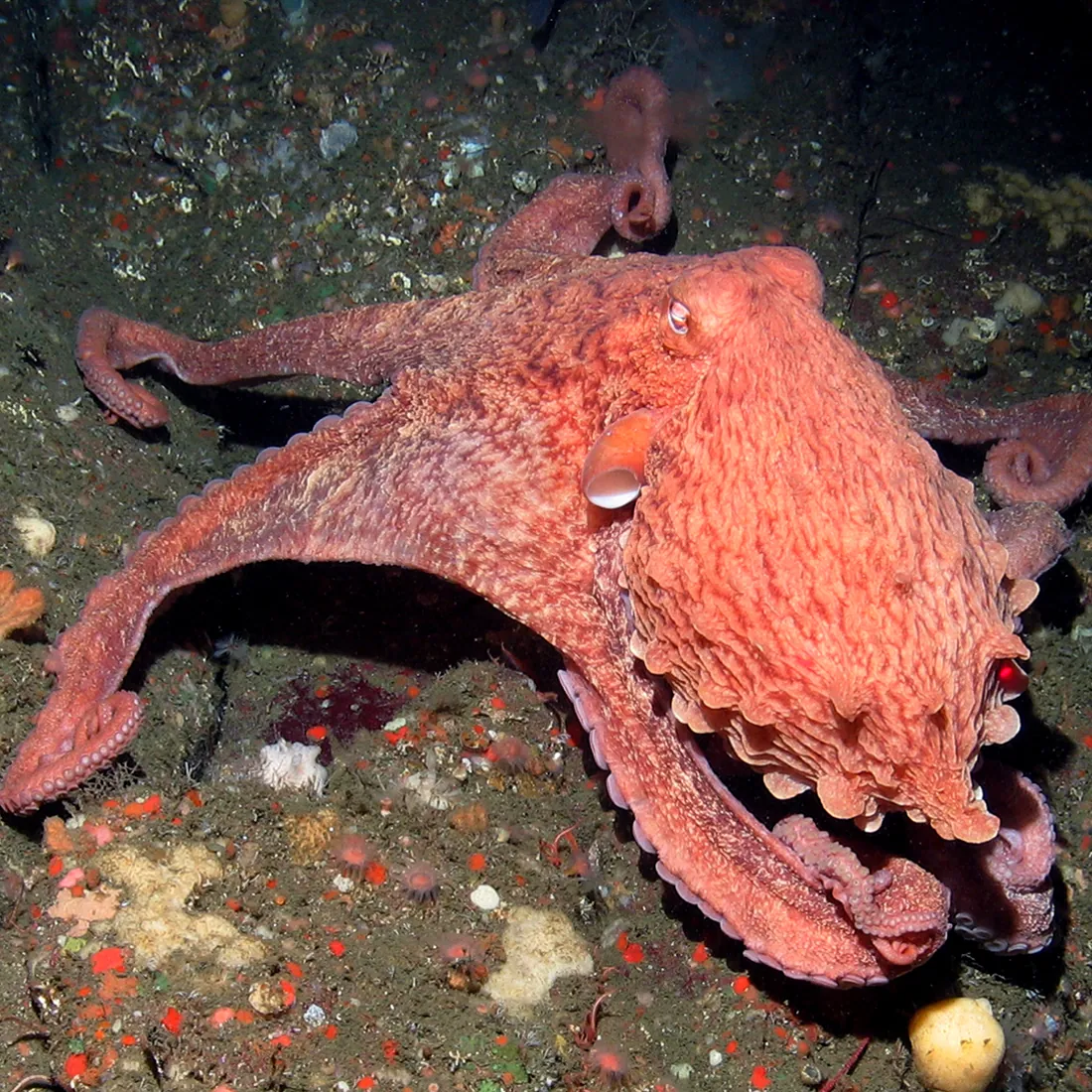
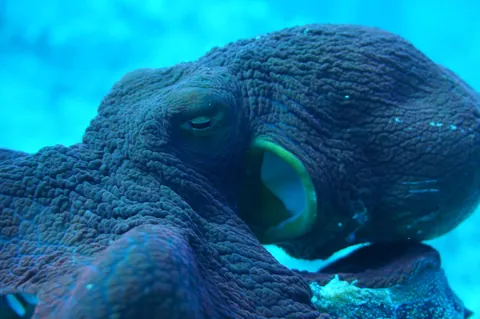
The giant Pacific octopus lives up to its name: it is the largest octopus in the world, growing up to 3 metres across and up to 272 kg. Despite its bulk, it spends most of its life hidden, tucked into a den and rarely seen out in the open.
Also known as: enteroctopus dofleini, enteroctopus dofleini (wülker, 1910), giant north pacific octopus, gpo, north pacific giant octopus, pacific giant octopus
Divers sometimes mistake other Pacific octopus species for this one, but the size gives it away: nothing else in its range grows anywhere close to this large, so an arm span reaching several metres confirms the ID.
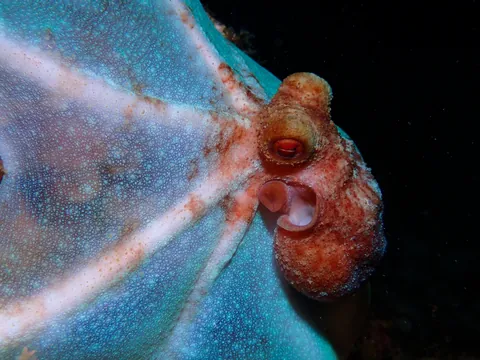
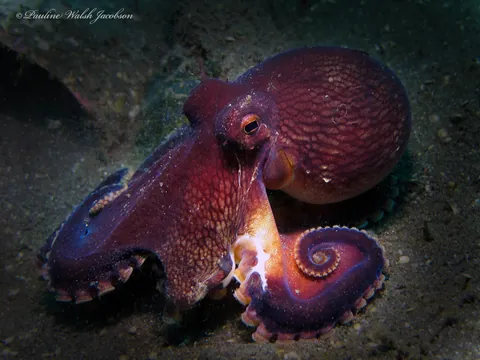
This octopus has a bulbous head and mantle and eight long arms, each lined with two rows of muscular suckers. Its skin can shift colour and texture in an instant, letting it blend into rock or reef within moments.
It lives along the North Pacific coast, from California north to Alaska and west across to Russia, Japan, and Korea, from the shallows down to as deep as 1500 metres. It favours cold, oxygen-rich water. It typically makes its home in a den, such as a rocky crevice, a dug-out burrow, or even a discarded barrel or pipe, and may reuse the same den for a month or more.
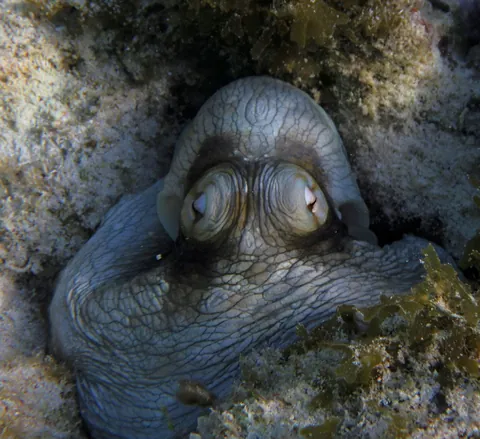
This octopus stays hidden in its den or camouflaged nearby for most of its life, leaving mainly to hunt. It swims by jet propulsion, forcing water through a siphon for a fast burst of speed, but crawls on its arms across the seafloor. It hunts crabs, clams, scallops, and other shellfish, gripping prey with its suckers and cracking shells with its hard beak. It will also take fish, squid, and other octopuses. Sea otters, seals, sperm whales, and sleeper sharks are among its predators.
In 2012, a wild giant Pacific octopus was photographed catching and drowning a seagull, showing it will take almost anything within reach, even birds.
Describe what you saw and we name it, then keep every species you find in your Oceandex.