Flying gurnard
Dactylopterus volitans
About
The flying gurnard is a bottom-dwelling fish of the Atlantic that grows to about 38 cm, up to 50 cm and 1.8 kg at most. Despite its name, it doesn't fly - it walks and digs across the seabed on oversized fins.
Also known as: flying gurdnard, flying gurnard, flying gurdnard, flying gurnard, helmet gurnard
- Length
- 38 cm · max 50 cm
- Weight
- max 1.8 kg
- Depth
- up to 100 m
How to tell it apart
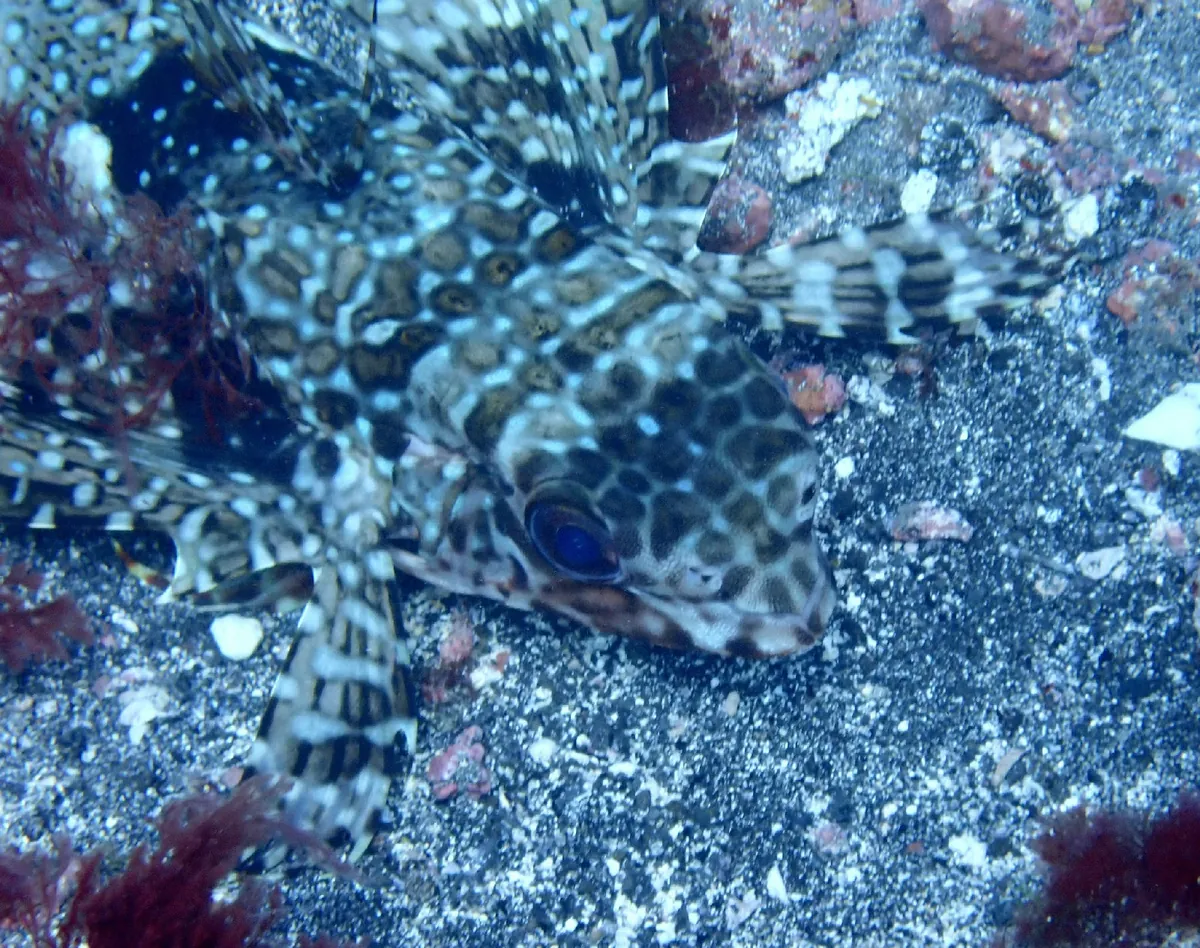
Its body colour changes to match the sand or mud beneath it, but no other bottom fish here spreads such huge, blue-tipped, wing-like pectoral fins - that is the giveaway when it feels threatened.
Appearance
This fish is brownish or greenish with reddish or yellowish patches, and has large eyes. Its most notable feature is a huge, fan-shaped pair of pectoral fins, each split into two parts. When the fish is alarmed, it spreads these fins wide like wings, showing a semitransparent, bright-blue colour at the tips.
Habitat
It lives on sand, mud, or rocky-sand bottoms on both sides of the Atlantic, from the northeast United States to Argentina and from the English Channel to Angola, including the Mediterranean and Gulf of Mexico. It is found from the shallows down to 100 m.
Behaviour
The flying gurnard uses one pectoral fin at a time to dig into the sediment, then sucks up the crabs, clams, and small fish it uncovers. It can shift its body colour from very dark to almost white to match the seabed it is resting on, and it makes two distinct grunting sounds.
Is it dangerous?
harmless
Did you know?
This fish makes two different grunting sounds, produced in an alternating pattern, rather than a single call.
Log it in Into the Blue
Describe what you saw and we name it, then keep every species you find in your Oceandex.