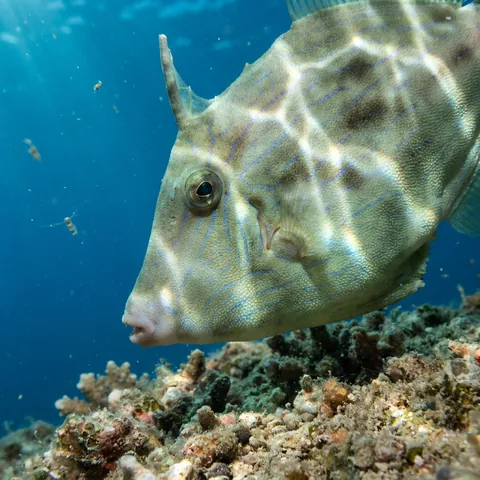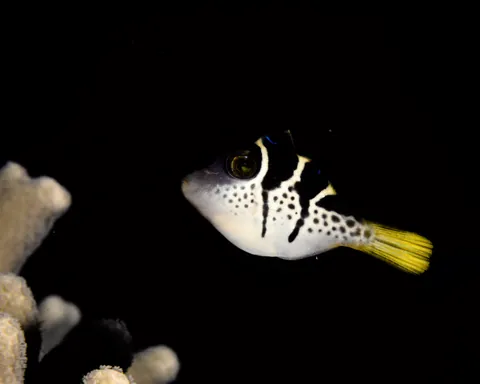
False puffer
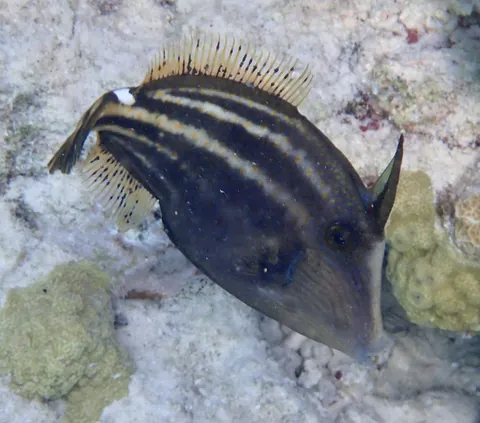
Paraluteres prionurus
filefish_g314
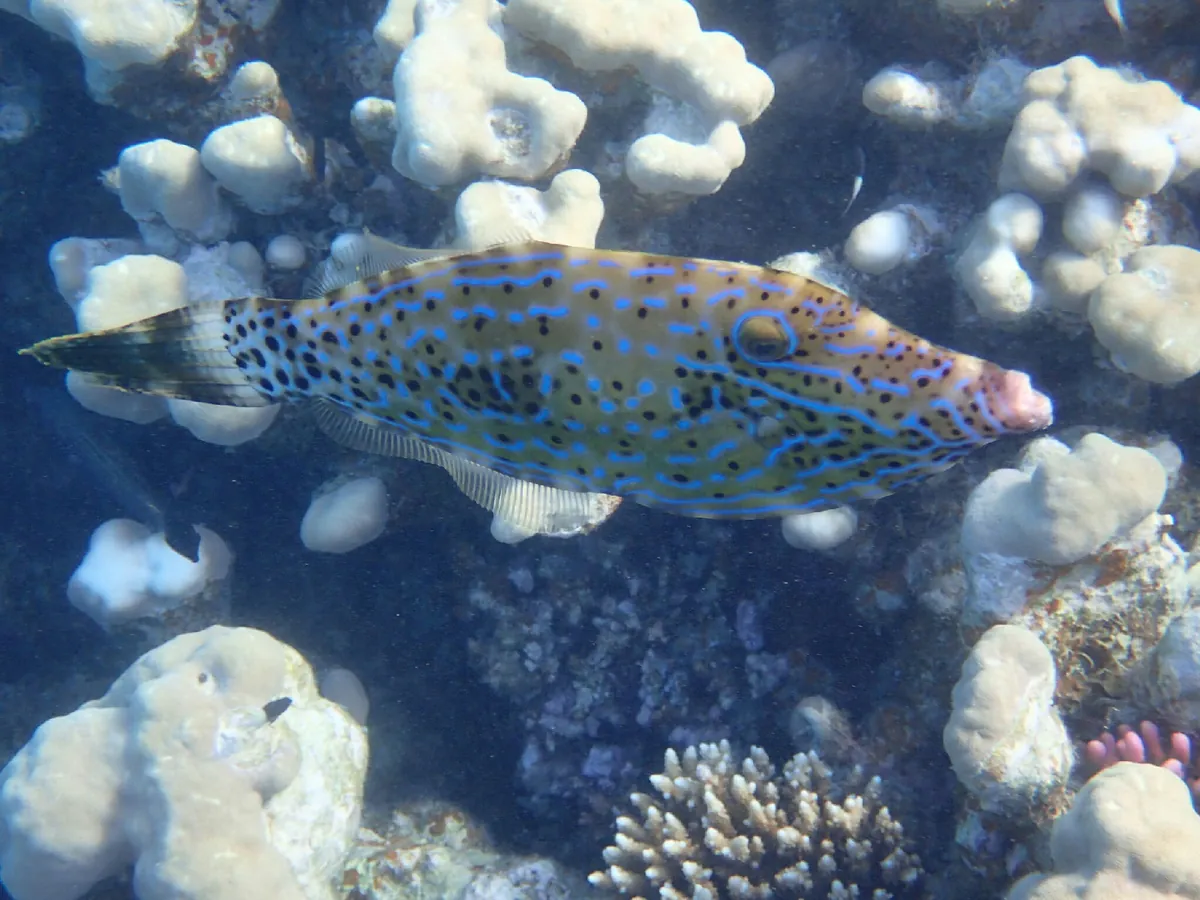
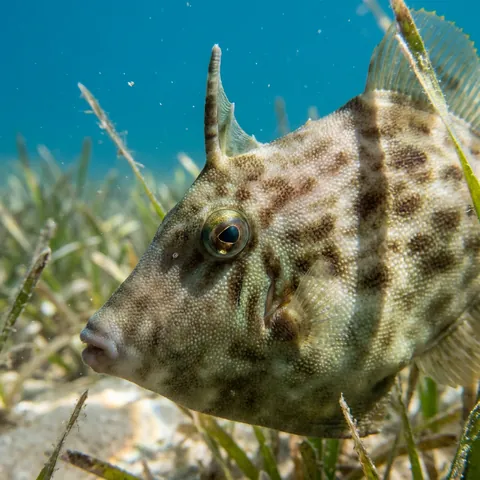
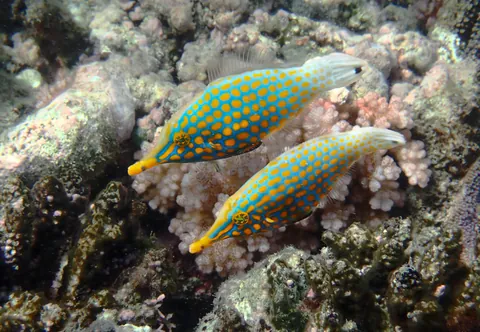
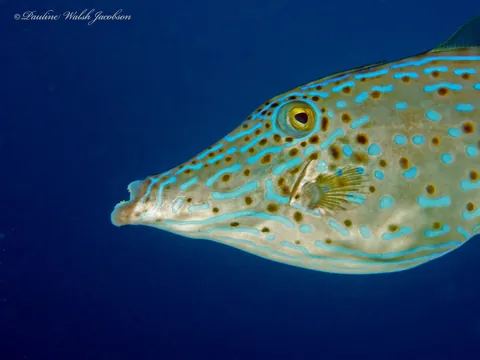
Filefish are small reef fish with a flat, diamond-shaped body and rough, sandpaper-like skin. In this app the group includes the scribbled leatherjacket filefish, the harlequin filefish, and the whitespotted filefish.
Filefish look a lot like triggerfish, but a filefish has only one working spine on its head, while a triggerfish has a thicker spine that a smaller one locks in place. Filefish also swim in a slower, more hesitant way, often drifting head-down near seaweed or soft coral. To tell the members apart, look at colour pattern, body markings, and whether the fish is hiding in seagrass, sand, or on the reef.
Filefish have a flat, diamond-shaped body and a small mouth at the tip of a pointed snout. Their fins are small and simple, and the tail fin is fan-shaped. A thin spine sits on top of the head and can fold down or lock upright. Most are under 60 cm long, and colours and patterns vary a lot between species. Some can change their pattern in seconds to match the background.
Filefish live in shallow water, usually no deeper than about 30 metres. They are found around lagoons, seaward reefs, and seagrass beds, and some enter estuaries. Some species hide among mats of drifting seaweed, where their colour matches the plants around them.
Filefish are weak swimmers with small fins, so they move slowly. They live alone, in pairs, or in small groups depending on the species. When threatened, they retreat into cracks in the reef. Many can quickly change their colour pattern for camouflage.
Diet varies across the group. Some filefish eat only algae and seagrass, others eat small bottom-dwelling animals such as tunicates and soft corals, and some feed on hard coral.
Filefish spawn at sites on the bottom that the male prepares and guards. Depending on the species, the male alone or both parents guard the eggs. The young drift in open water, often sheltering among floating seaweed.
Some filefish can flick their head-spine and pelvis up at the same time to wedge themselves into a crevice, making it much harder for a predator to pull them out.
Describe what you saw and we name it, then keep every species you find in your Oceandex.