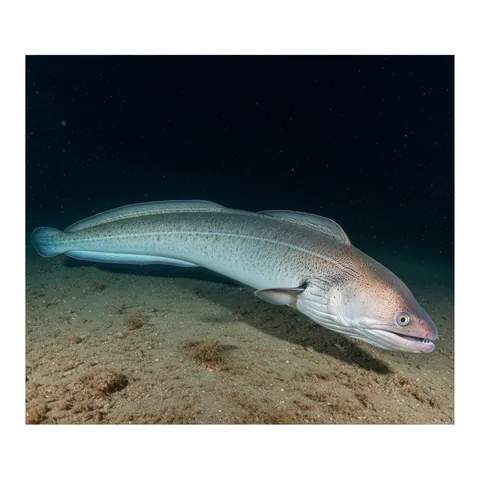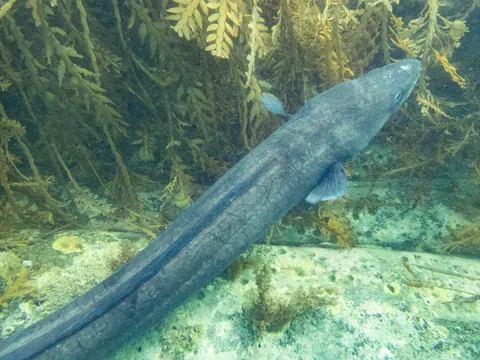
Conger eels
conger
Conger conger
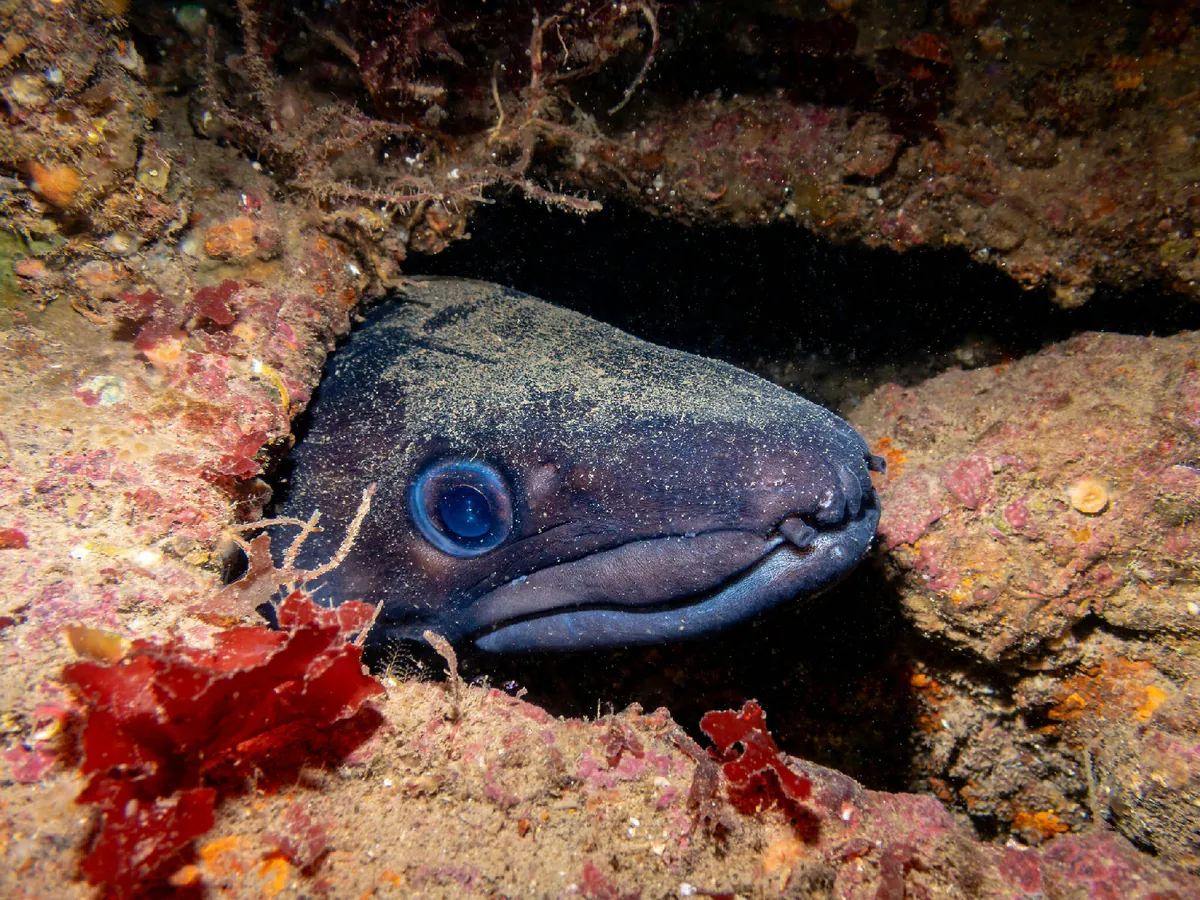
The European conger is a giant, grey eel that hides by day in rocky crevices and comes out at night to hunt. It has a reputation among divers as one of the biggest and boldest eels on the reef.
Also known as: european conger eel, conger eel
It shares dens with moray eels and can look similar at a glance. The conger has pectoral fins just behind its head; moray eels have none.
Its body is long and snake-like, with no scales, coloured grey to almost black above and white on the belly. A row of small white spots runs along the lateral line, the faint sensory line along its side. The head is rounded and slightly flattened, with a large mouth full of small conical teeth set in rows. Large gill openings sit on each side of the head. The dorsal and anal fins run into the tail fin as one continuous fringe, and it has pectoral fins just behind the head but no fins underneath.
It lives in the eastern Atlantic from Norway and Iceland south to Senegal, as well as through the Mediterranean and Black Sea. Young congers stay on rough, broken, rocky ground close to shore, while adults move into deeper water offshore.
European congers hide in rock holes and crevices by day, sometimes sharing a den with moray eels, and hunt at night. They feed on fish, squid and octopus, and crustaceans, and will also scavenge dead fish. Large individuals can be aggressive and are considered capable of injuring a diver who corners or grabs one.
Once a conger nears breeding age, its body transforms: the skeleton loses mass, the teeth fall out, and the reproductive organs grow large as it migrates off to spawn - after which it dies.
Describe what you saw and we name it, then keep every species you find in your Oceandex.