Gulf Wobbegong
Orectolobus halei
Sutorectus tentaculatus
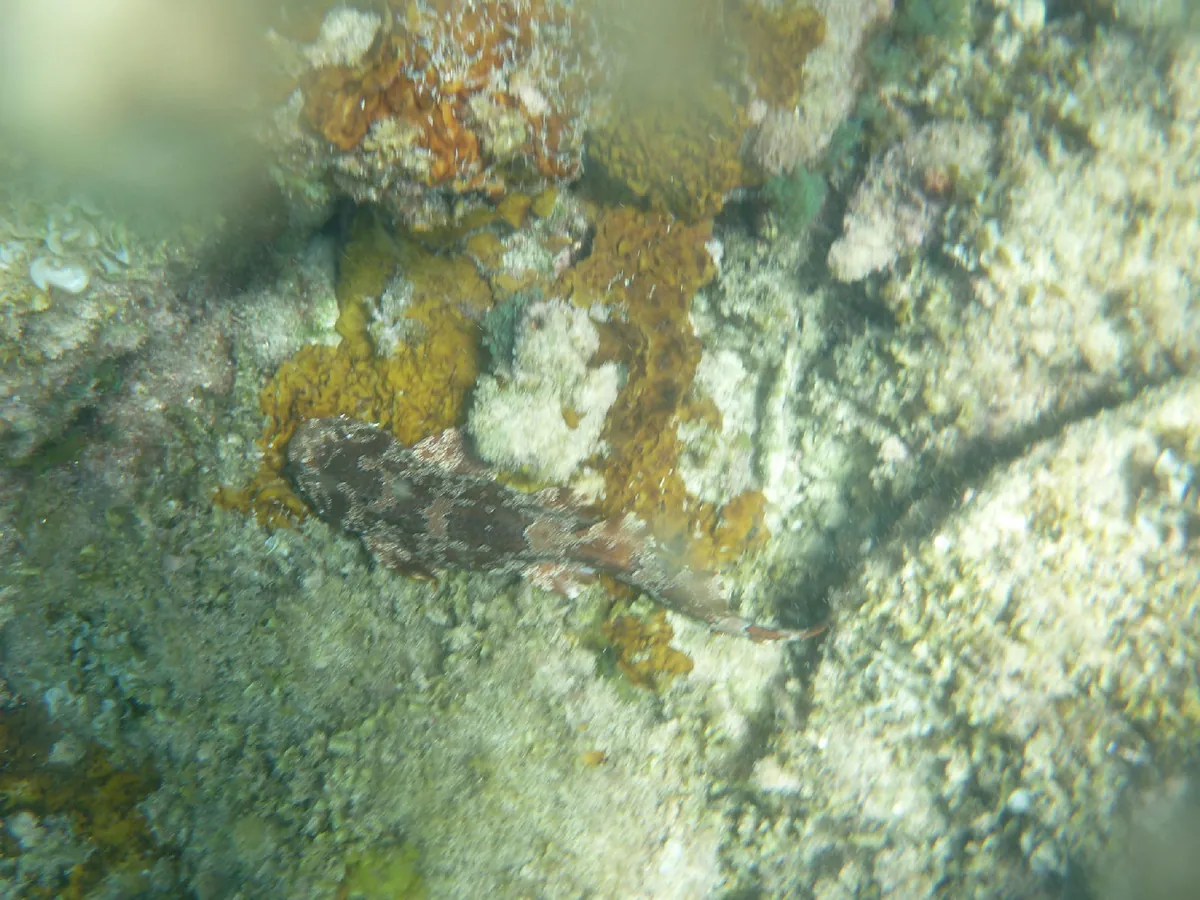
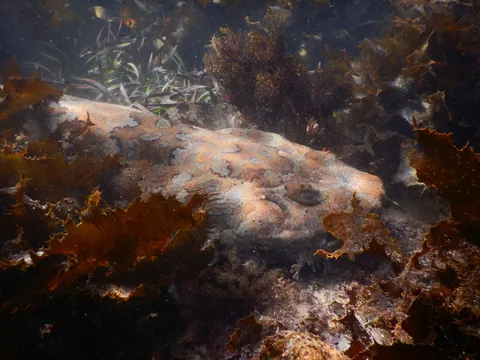
The cobbler wobbegong is a small carpet shark that spends most of its time lying still on the reef, disguised as a patch of rock. It grows to about 92 cm long and relies almost entirely on camouflage to catch its food.
Also known as: blotched wobbegong, sombre carpet shark, cobbler carpetshark, cobbler carpet shark
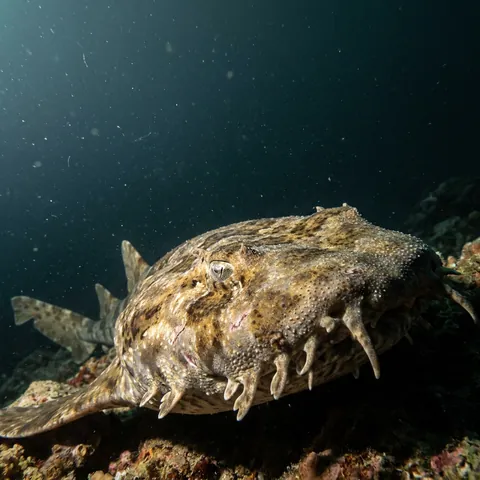
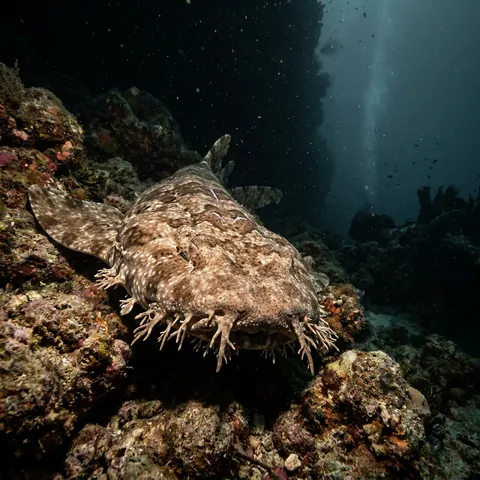
It can be confused with other wobbegong sharks, including the tasseled wobbegong. Unlike that species' long, branching tassels around the head, the cobbler wobbegong has only short, wart-like lumps.
Its body is flattened from top to bottom and covered in a mottled, carpet-like skin pattern that blends into the reef. Small warty lumps, called dermal tubercles, cover the sides of its head and its back, breaking up its outline against the rocks. Its mouth sits in front of its eyes and holds rows of long, fang-like teeth.
It lives on rocky reefs and weedy, inshore areas of the continental shelf, down to about 35 metres, across temperate and tropical waters of the western Pacific and eastern Indian Oceans. It is most common around Australia, and while it can settle in one spot for a while, it does not stay in the same place permanently.
It is an ambush hunter, lying hidden under sand or among rocks until prey passes close by. Its heavy jaws and sharp, jagged teeth let it grip small bottom-dwelling fish as well as crabs, lobsters, and abalone.
This shark gives birth to live young that develop inside eggs within the mother's body. Pups are around 22 cm long at birth, and males mature at about 65 cm.
This species is listed as least concern. It is caught only as minor bycatch in Western Australian fisheries, mostly in trawl nets, and released fish generally survive, so bycatch has not caused a population decline.
Describe what you saw and we name it, then keep every species you find in your Oceandex.