Sea basses
sea_basses_g345
Dicentrarchus labrax
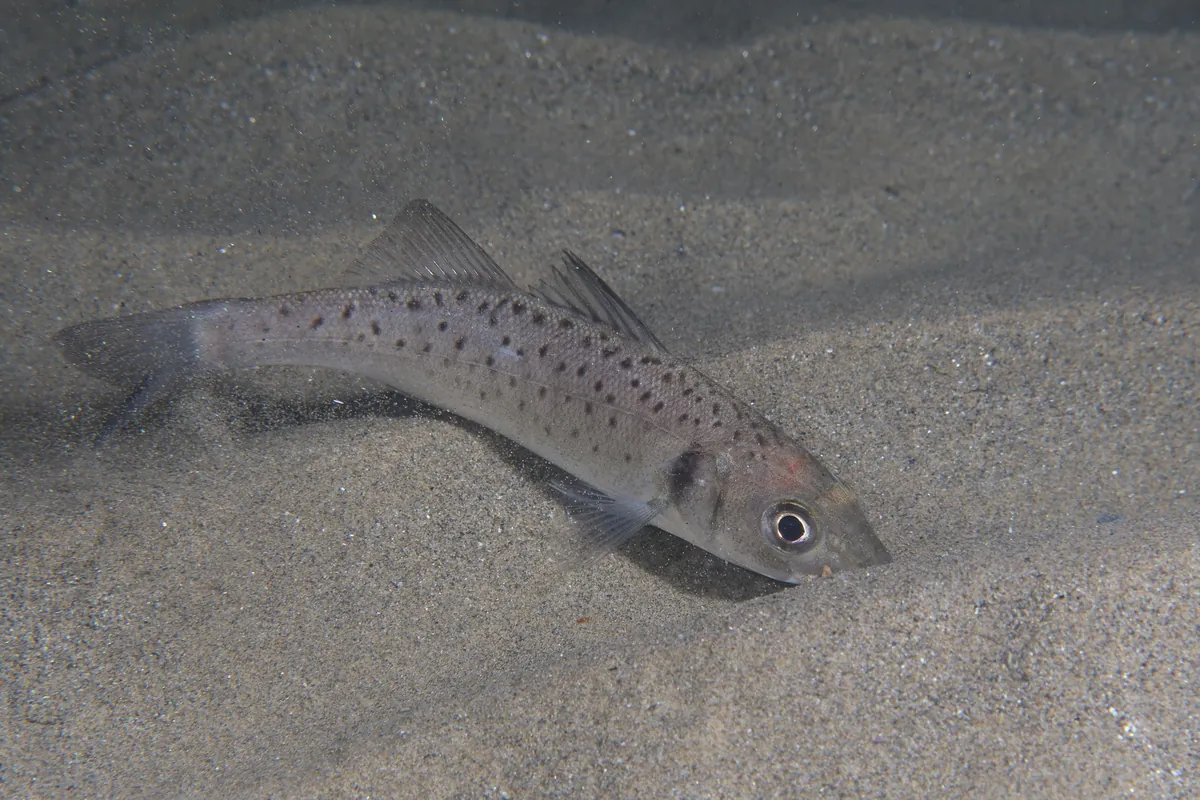
The European bass is a sleek, silvery hunter of coastal waters, prized by both sport fishermen and diners. It grows up to 103 cm and 12 kg, though most adults are closer to 50 cm.
Also known as: european sea bass, sea dace, common bass
Silvery coastal fish are easy to mix up. Look for a faint dark spot at the top corner of the gill cover, just behind the eye, a mark adult bass keep even after their juvenile back spots fade.
The body is long and streamlined, with two separate dorsal fins along the back and a moderately forked tail. The back is silvery grey-blue, the sides silvery, and the belly sometimes has a yellow tinge. Young fish carry dark spots on the back, but these fade away as the fish grows.
Lives in coastal waters, estuaries, lagoons, and river mouths, from southern Norway down to Senegal, throughout the Mediterranean and into the southern Black Sea. It stays down to about 100 m but is more common in shallow water, moving offshore into deeper water in winter.
It hunts by both day and night, though the largest fish tend to feed mostly after dark. Young bass form schools, but adults spend more time alone or in smaller groups, moving between coastal feeding grounds and inshore areas as the seasons change.
It was one of the first fish farmed commercially in Europe, cultured in coastal lagoons long before modern fish farms existed.
Describe what you saw and we name it, then keep every species you find in your Oceandex.